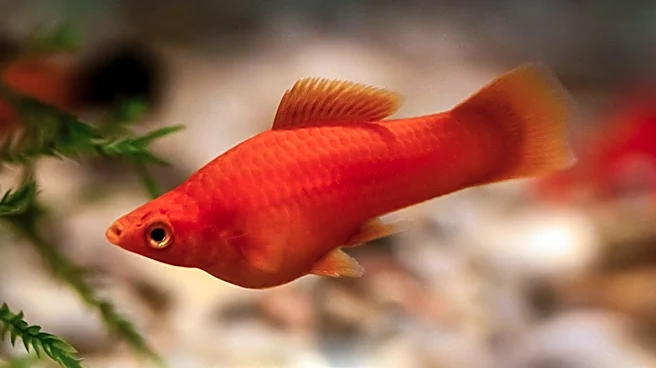

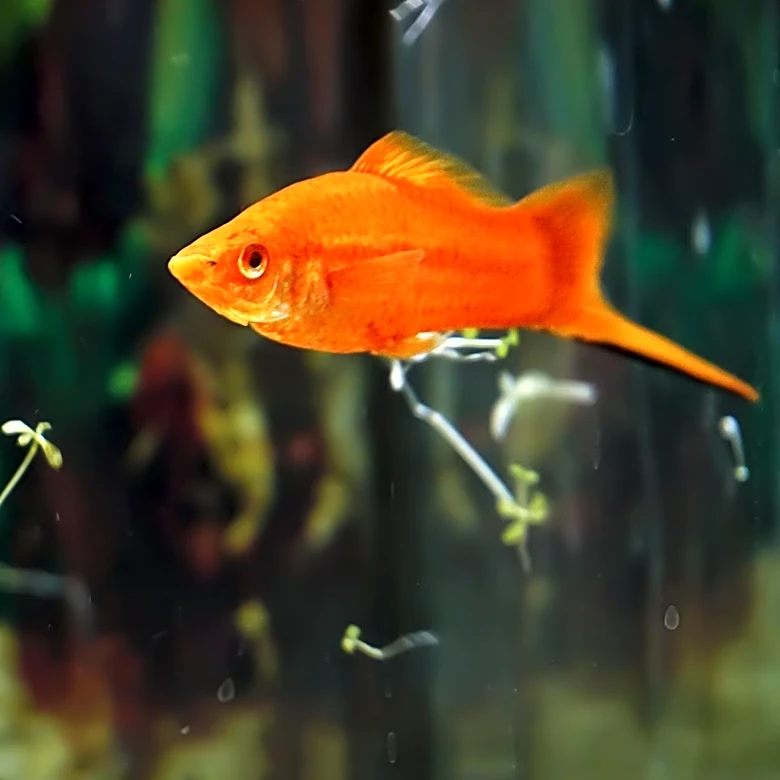







The platy fish, a popular inhabitant of home aquariums, is renowned for its prolific reproductive capabilities and fascinating genetic diversity. As livebearers, platies belong to the family Poeciliidae, meaning they give birth to live young rather than laying eggs. This characteristic, combined with their relatively short gestation period and large broods, makes them a favorite among aquarists interested in breeding. Understanding their reproductive biology
and genetic makeup provides insight into their widespread presence and the vast array of cultivated varieties.
Livebearing and Reproductive Cycle
Platies are ovoviviparous, a reproductive strategy where eggs hatch inside the mother, and live young are expelled. The male platy possesses a specialized anal fin called a gonopodium, which is used for internal fertilization. Once inseminated, the female can store sperm for several weeks, allowing her to produce multiple broods without further mating. However, "fresh sperm" is generally preferred for fertilization. Sexual maturity in platies is typically reached within three to four months.
The gestation period for platies lasts approximately 24 days. About a week before birth, a dark "gravid spot" becomes visible in the posterior abdomen of the female, indicating the developing fry. In lighter-colored individuals, the eyes of the unborn fry may even be visible through the mother's body in the later stages of pregnancy. A single brood can consist of 20 to 50 fry, and females can give birth as often as once a month. In optimal conditions, up to 80 relatively large young can be born in one litter. These fry are born free-swimming and capable of feeding almost immediately, unlike the larvae of many egg-laying fish that spend days on the bottom consuming a yolk sac.
Genetic Diversity and Hybridization
The genus *Xiphophorus*, to which platies belong, exhibits significant genetic complexity. The genome of *Xiphophorus maculatus*, the southern platyfish, has been sequenced, making it a model organism in cancer research. This genetic understanding also extends to the study of coloration and sex-dependent polymorphism within the species. Wild platies typically display drabber colors, such as olive or yellowish-gray, often with black markings. However, through selective breeding and hybridization, an astonishing number of cultivated varieties have emerged.
Commercial platies are often hybrids of the southern platyfish and the variable platyfish (*Xiphophorus variatus*). This interbreeding has led to an estimated 350,000 recognized platy varieties, showcasing nearly every color imaginable, including various combinations of yellow, red, and black. These cultivated forms also exhibit diverse fin shapes, differing significantly from their natural counterparts. The extensive hybridization means that truly purebred platies are rare in the aquarium trade. The genetic makeup of *Xiphophorus* species includes X, W, and Y chromosomes, influencing sex determination, with females being YW, XX, or XW, and males being XY or YY. This genetic flexibility contributes to the wide range of observable traits in platies.