





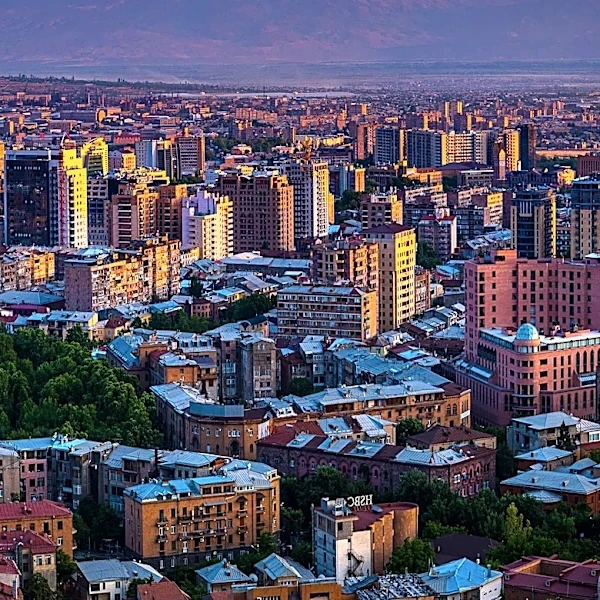



Kyiv, the capital and most populous city of Ukraine, is a place deeply marked by its long and often turbulent history. Located in the north-central part of the country on the Dnieper River, it has served as a pivotal center in Eastern Europe for centuries. From its probable origins as a trading post in the 5th century to its modern status as a significant industrial, scientific, educational, and cultural hub, Kyiv's story is one of repeated prominence,
destruction, and recovery. Its strategic location and cultural importance have made it a focal point for various empires and states, each leaving an indelible mark on its development.
Early Origins and the Rise of Kievan Rus'
The city's name is traditionally linked to Kyi, one of its four legendary founders. Kyiv's history stretches back to the late Paleolithic period, with evidence of human habitation in the region. During the Bronze Age, the area around Kyiv was part of the Trypillian culture, and in the early Iron Age, tribes practicing agriculture and trade with the Scythians and ancient Black Sea states settled there. Roman coins from the 2nd to 4th centuries suggest early trade connections with the Roman Empire's eastern provinces.Kyiv likely emerged as a commercial center as early as the 5th century, possibly as a trading post for early Slavs. It was situated on a major trade route connecting Scandinavia and Constantinople. Initially a tributary of the Khazars, the city was captured by the Varangians (Vikings) in the mid-9th century. Under Varangian rule, Kyiv ascended to become the capital of Kievan Rus', the first East Slavic state. This period, from the 10th to the 12th centuries, marked a golden age for Kyiv, establishing it as a political and cultural capital of East Slavic civilization.
Centuries of Obscurity and Foreign Rule
The prosperity of Kievan Rus' came to a devastating end with the Mongol invasion in 1240. During the Siege of Kyiv, the city was completely destroyed, losing most of its influence for centuries. It became a provincial capital of marginal importance, situated on the outskirts of territories controlled by powerful neighbors. First, it fell under the Grand Duchy of Lithuania, followed by Poland, and then Russia. This long period saw Kyiv's status diminish, becoming a peripheral city rather than a central power.Despite its reduced standing, Kyiv's underlying importance persisted. Its location on the Dnieper River continued to make it a valuable asset, even if its political autonomy was curtailed. The city's cultural and religious heritage, though suppressed at times, remained a foundational element of East Slavic identity. This era of foreign domination shaped Kyiv's character, instilling a deep sense of resilience and a complex cultural tapestry.
Revival and Modern Challenges
Kyiv experienced a resurgence during the Russian Empire's industrial revolution in the late 19th century, once again prospering as an economic center. Following the tumultuous period after the Russian Revolution of 1917, Kyiv became an important city within the Ukrainian Soviet Socialist Republic from 1921, and its capital from 1934. However, this period of growth was interrupted by World War II, during which the city suffered significant damage. Despite the destruction, Kyiv quickly recovered in the post-war years, becoming the third-largest city of the Soviet Union.With the collapse of the Soviet Union and Ukraine's independence in 1991, Kyiv remained the capital. The city transitioned into a market economy and electoral democracy, becoming Ukraine's largest and wealthiest city. While it lost its dependence on the armaments industry, which impacted its science and technology sectors, the growth of services and finance fueled development in housing and urban infrastructure. As of January 2022, Kyiv's population was 2,952,301, making it the seventh-most populous city in Europe. Today, Kyiv continues to be a vital center, navigating modern challenges while drawing on its deep historical roots and enduring spirit of resilience.