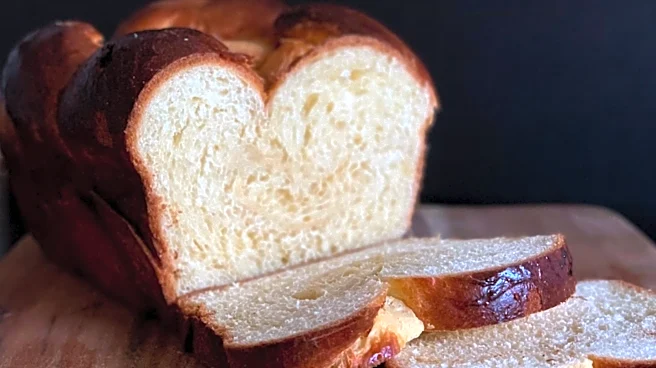







Brioche, a celebrated French pastry, is a testament to the art of baking, distinguished by its rich and tender crumb and a golden, flaky crust. This viennoiserie, a category of baked goods that includes eggs, butter, and often sugar, stands apart due to its luxurious texture and flavor. Chef Joël Robuchon aptly described it as "light and slightly puffy, more or less fine, according to the proportion of butter and eggs," highlighting the delicate balance
required in its creation.
Essential Ingredients and Dough Composition
The foundation of brioche lies in its specific blend of ingredients. The dough typically contains flour, eggs, butter, a liquid (which can be milk, water, cream, or sometimes brandy), a leavening agent (either yeast or sourdough), salt, and occasionally sugar. The high proportion of eggs and butter is what gives brioche its characteristic richness. A common flour-to-butter ratio is 2:1, meaning for every two parts flour, there is one part butter. Historically, variations in richness existed, ranging from the "rich man's brioche" with a 3:2 flour-to-butter ratio to the more economical *pain brioché* with a 4:1 ratio. Some recipes, like those used by the Roux Brothers, even call for a ratio of 700 grams of butter to 1 kilogram of flour, showcasing the emphasis on butter content.
Beyond the basic ingredients, brioche is often enhanced with additions such as fruit or chocolate chips, making it a versatile base for both sweet and savory applications. The quality and proportion of these ingredients are crucial in achieving the desired texture and flavor that define this classic pastry.
The Meticulous Preparation Process
The preparation of brioche dough is a multi-step process that requires patience and precision. The normal method begins with making the dough, followed by an initial rise at room temperature until it doubles in volume. After this first proofing, the dough is punched down and then allowed to rise again, this time in the refrigerator for varying periods, depending on the recipe. This refrigeration step, known as retarding the dough, is vital for developing its flavor. It also stiffens the dough, making it easier to handle and shape, while still allowing it to rise slowly.
Once the dough has been adequately retarded, it is shaped and placed into containers for its final proofing. Before baking, it is generally brushed with an egg wash, which contributes to its dark, golden, and flaky crust. The brioche is then baked at a high temperature, typically 230 °C (446 °F), until the crust browns and the interior reaches at least 90 °C (194 °F). The rising times vary depending on the size of the brioche; small rolls might take 1 to 1.5 hours for the first rise, while larger loaves require more time until they double in size. This careful process ensures the brioche achieves its signature light and tender crumb.
Diverse Forms and Culinary Uses
Brioche takes on numerous forms and has a wide array of culinary uses. Perhaps the most classically recognized form is the *brioche à tête* or *parisienne*, which is baked in a fluted round, flared tin. It features a large ball of dough at the bottom, topped with a smaller ball to form a distinctive "head" (*tête*). Another popular form is the *brioche de Nanterre*, a loaf baked in a standard loaf pan. Instead of a single piece, two rows of small dough pieces are placed in the pan, proofed, and then baked, fusing together to create an attractive pattern. Brioche can also be made as an ordinary loaf without being rolled into balls.
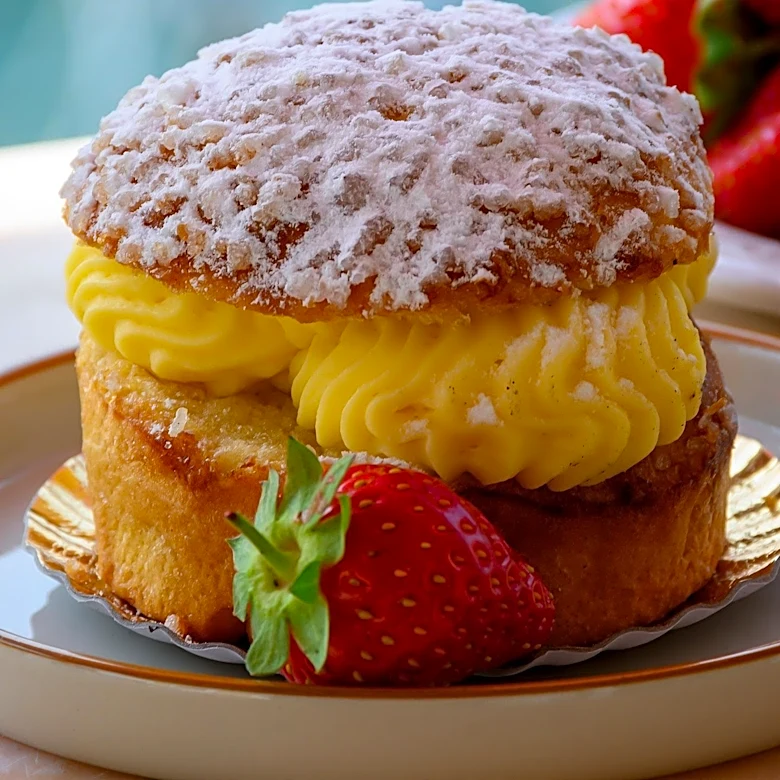
Beyond these traditional shapes, brioche is incredibly versatile in the kitchen. It can be served plain, or with sweet fillings like fresh fruits, vanilla cream, or jam. Stale brioche can even be transformed into *bostock* by topping it with frangipane. On the savory side, brioche is commonly used for hamburger buns and can serve as the basis for dishes like coulibiac, fillet of beef en croute, or with fillings such as foie gras, sausage, or cervelat lyonnais. Its adaptability makes it a cherished component in both simple meals and elaborate culinary creations.