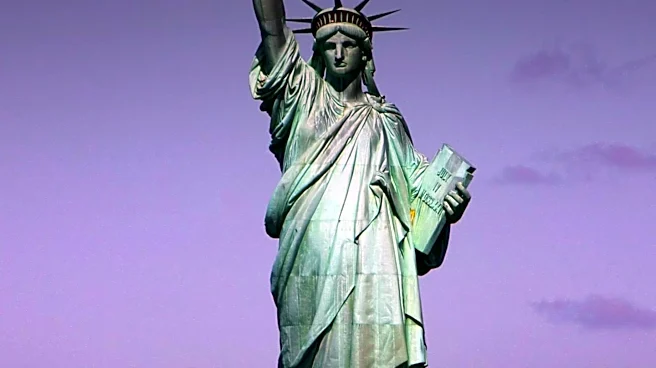









The Statue of Liberty, officially known as Liberty Enlightening the World, stands as a symbol of freedom and democracy. This iconic monument was a gift from France to the United States, commemorating the American Centennial. Its journey from conception to completion is a fascinating tale of international collaboration and engineering marvels. This article delves into the historical timeline of the Statue of Liberty, highlighting key milestones and the efforts
that brought this colossal sculpture to life.
Conception and Design
The idea for the Statue of Liberty was born out of a desire to celebrate the friendship between France and the United States. The project was initiated by Edouard de Laboulaye, who envisioned a monument that would symbolize liberty and democracy. French sculptor Frédéric Auguste Bartholdi was commissioned to design the statue, and he proposed a massive sculpture that would stand as a beacon of freedom.
Bartholdi's design was ambitious, and it required significant funding and engineering expertise. The Union Franco-Américaine was established to raise funds for the statue's construction, and over a million francs were collected throughout France. The design patent for the statue was awarded to Bartholdi in 1879, marking a significant step forward in the project's development.
Construction and Assembly
The construction of the Statue of Liberty was a monumental task that involved the collaboration of several experts. Gustave Eiffel, renowned for his work on the Eiffel Tower, was responsible for the statue's internal structure. The statue was constructed in France and shipped to the United States in pieces. Upon its arrival, it was reassembled on Bedloe's Island, now known as Liberty Island, in New York Harbor.
The statue was officially presented to the United States in October 1886, marking the culmination of years of effort and collaboration. The dedication ceremony was a grand event, attended by dignitaries from both France and the United States. The statue's completion was a testament to the enduring friendship between the two nations and their shared values of liberty and democracy.
Legacy and Symbolism
Since its unveiling, the Statue of Liberty has become an enduring symbol of freedom and hope. It has welcomed millions of immigrants arriving by sea, serving as a beacon of opportunity and a reminder of the values that the United States holds dear. The statue's image has been used in countless cultural and political contexts, reinforcing its status as a global icon.
The Statue of Liberty's historical journey is a testament to the power of collaboration and the enduring appeal of liberty. Its story continues to inspire people around the world, reminding us of the importance of freedom and the bonds of friendship between nations.