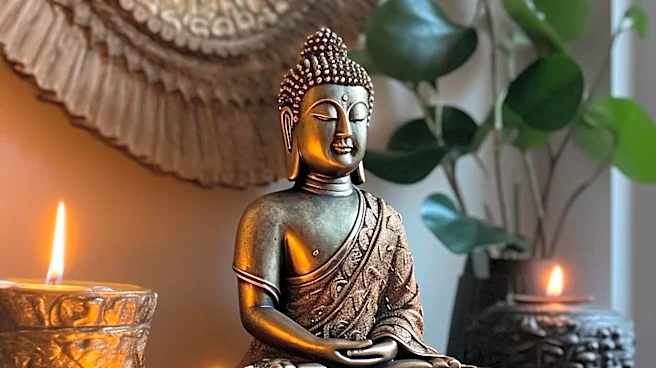









Satipatthana, or the establishment of mindfulness, is a cornerstone of Theravada Buddhist practice. It is considered essential for developing a wholesome state of mind and achieving liberation. The Satipatthana Sutta, a key text in this tradition, outlines the practice of mindfulness across four domains: the body, feelings, mind, and teachings. This practice is central to the Vipassana movement, which emphasizes insight into impermanence and the path
to liberation.
Historical Context and Development
The Satipatthana Sutta is one of the most celebrated texts in the Pali Canon of Theravada Buddhism. It is believed to have been compiled from elements of other suttas, reflecting its foundational role in the tradition. The Sutta's teachings are found in various Buddhist traditions, but it holds particular significance in Theravada Buddhism, where it forms the basis for contemporary meditation practices.
The Sutta's influence extends to the Vipassana movement, which focuses on developing mindfulness to gain insight into the nature of reality. This movement has popularized the practice of Satipatthana, making it accessible to practitioners worldwide. The emphasis on mindfulness as a path to liberation has made the Sutta a central text for those seeking to understand and practice Theravada Buddhism.
The Practice of Satipatthana
In Theravada Buddhism, Satipatthana is practiced by applying mindful attention to the four domains outlined in the Sutta. This practice is thought to aid in the elimination of the five hindrances and the development of the seven aspects of awakening. By focusing on the body, feelings, mind, and teachings, practitioners cultivate a deep awareness of their experiences and the nature of reality.
The practice of Satipatthana is not limited to formal meditation sessions. It extends to daily life, where practitioners are encouraged to maintain mindfulness in all activities. This continuous practice helps develop a stable and concentrated mind, which is essential for achieving deeper states of meditation and insight.
Modern Influence and Adaptations
The teachings of the Satipatthana Sutta have been adapted and integrated into modern mindfulness practices. The emphasis on present-moment awareness and non-reactivity has resonated with contemporary audiences, leading to the widespread adoption of mindfulness techniques in various contexts, including healthcare and education.
Despite these adaptations, the core principles of Satipatthana remain rooted in the Theravada tradition. The practice continues to be a vital part of the spiritual path for many Buddhists, offering a structured approach to developing mindfulness and insight. As such, Satipatthana remains a key element of Theravada Buddhism, guiding practitioners toward liberation and enlightenment.