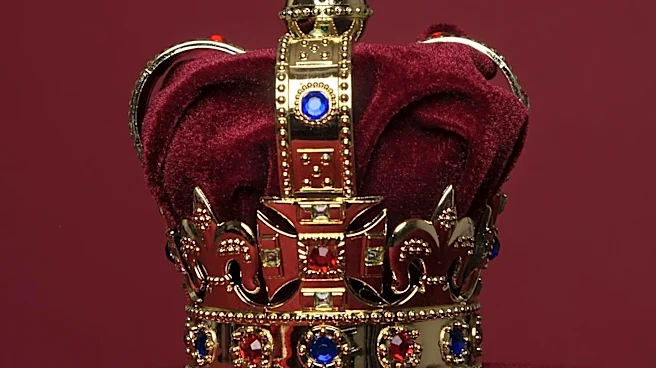










Norway's monarchy has a rich and complex history that dates back to the unification of the country in 872. Over the centuries, the monarchy has evolved through various unions and political changes, shaping the nation's identity. This article explores the historical journey of Norway's monarchy, from its early days to its current form.
Early Monarchy and Unification
The origins of Norway's monarchy can be traced back to the Viking Age when the country was divided into several smaller
kingdoms. Harald Fairhair is credited with unifying these petty kingdoms into a single entity in 872, following his victory at the Battle of Hafrsfjord. This unification marked the beginning of a continuous monarchy in Norway, although the boundaries of Fairhair's kingdom were not identical to those of present-day Norway.
The early Norwegian monarchy was characterized by elective succession, where kings were often chosen by high-ranking farmers. This system gradually evolved into a hereditary monarchy, with Olaf II, also known as Saint Olaf, playing a significant role in consolidating royal power. Olaf's reign from 1015 to 1028 is notable for his efforts to convert Norway to Christianity, which had a lasting impact on the country's cultural and religious landscape.
Unions and Foreign Influence
Throughout its history, Norway has been part of several unions with neighboring countries. The Kalmar Union, established in the late 14th century, united Norway, Denmark, and Sweden under a single monarch. However, this union dissolved in 1523 when Sweden left, leaving Norway in an unequal union with Denmark.
During this period, the Norwegian monarchy was heavily influenced by Danish rule. The Protestant Reformation and power struggles between Norwegian nobles and the Danish king led to significant changes in the monarchy's structure. The Norwegian Riksråd, a council of nobles, was abolished, and the church was brought under Danish control. Despite these challenges, the hereditary nature of the Norwegian monarchy ensured its continuity.
Modern Monarchy and Constitutional Changes
The modern era of Norway's monarchy began in 1814 when the country entered a union with Sweden following Denmark-Norway's defeat in the Napoleonic Wars. This union lasted until 1905 when a referendum granted Norway independence, and Haakon VII was elected as king through a plebiscite.
Today, Norway is a constitutional monarchy with a parliamentary system. The current king, Harald V, serves as a symbolic head of state, with executive powers exercised by the elected government. The monarchy remains a popular institution in Norway, with regular confirmations of support from the Storting, the country's parliament.
In summary, Norway's monarchy has undergone significant transformations over the centuries, from its early unification to its current constitutional form. Despite periods of foreign influence and political change, the monarchy has remained a central part of Norway's national identity.