


The Old Farmer's Almanac is widely recognized for its long-range weather forecasts, a feature that has been central to its identity since its founding in 1792. These predictions, which emphasize temperature and precipitation deviations from averages, are a cornerstone of the annual publication. While the almanac has always relied on a unique, secret formula developed by its founder, Robert Bailey Thomas, its forecasting methods have evolved over time,
incorporating modern scientific observations alongside traditional techniques. The blend of historical patterns, astronomical data, and a touch of mystery continues to captivate readers across North America.
The Enduring Secret Formula
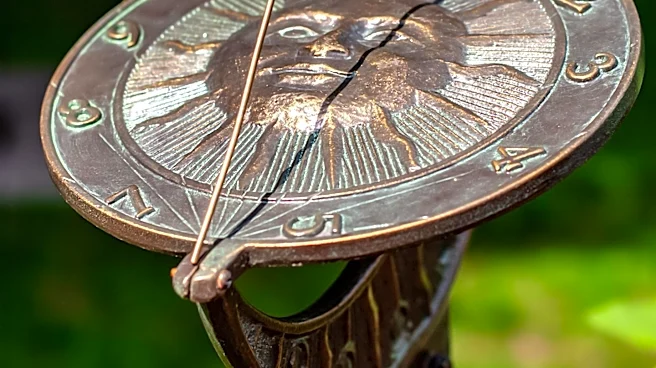
Robert Bailey Thomas, the almanac's founder, developed a secret forecasting formula based on his studies of solar activity, astronomy cycles, and weather patterns. This formula, a closely guarded secret, is reportedly still in use today. Few individuals, apart from the almanac's dedicated prognosticators, have ever seen it. The formula is physically kept in a black tin box at the almanac's offices in Dublin, New Hampshire, adding to its mystique. This commitment to a proprietary method distinguishes The Old Farmer's Almanac from other weather prediction sources.
Over the years, while the core formula remains, the almanac's forecasting methods have been refined. Today, they also integrate observations of sunspots and other solar activity. Weather trends and events are predicted by comparing solar patterns and historical weather conditions with current solar activity. These forecasts are prepared remarkably far in advance, sometimes as much as 18 months before publication, and are presented regionally. The U.S. edition covers 16 regions, while the Canadian edition covers five. Additional regions, including Hawaii, Alaska, the Yukon Territory, and the Northwest Territories, are available on the almanac's website.
Accuracy and Public Perception
The accuracy of The Old Farmer's Almanac's weather predictions has been a subject of ongoing discussion and analysis. The almanac itself acknowledges the inherent challenges in forecasting, stating in its bicentennial edition, "neither we nor anyone else has as yet gained sufficient insight into the mysteries of the universe to predict weather with anything resembling total accuracy." This candid admission highlights the complexity of long-range weather forecasting.
Despite the almanac's popularity, several independent analyses have concluded that its forecasts are not consistently accurate. For instance, *USA Today* reported that "according to numerous media analyses neither The Old Farmer's Almanac nor the Farmers' Almanac gets it right." A study by John Walsh at the University of Illinois, which reviewed five years of monthly forecasts, found that 50.7% of temperature forecasts and 51.9% of precipitation forecasts were in the correct direction. This is only slightly better than a randomly generated forecast, which would be correct 50% of the time. Nevertheless, the almanac's predictions remain a highly anticipated feature for its millions of readers, who often consult it for gardening, planning, and general interest, regardless of scientific validation.