

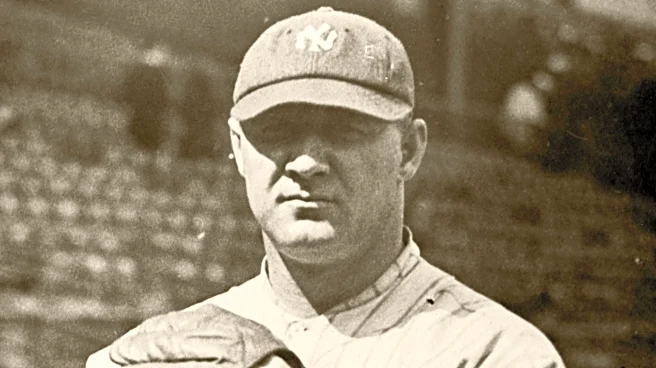
The 1943 World Series marked the 40th edition of Major League Baseball's championship series, pitting the defending champion St. Louis Cardinals against the New York Yankees. This series was a rematch of the 1942 World Series, and the Yankees ultimately emerged victorious, securing their tenth championship in franchise history over five games. The context of World War II significantly influenced the series, from travel restrictions to depleted team
rosters, making this a unique chapter in baseball history.
Wartime Conditions and Roster Depletions
Due to World War II, the 1943 World Series operated under specific wartime conditions. Travel restrictions led to a 3-4 home team format, meaning there was only one trip between ballparks. Had the series concluded in a four-game sweep, one park would have hosted three games while the other hosted only one. This format was a direct response to the need to conserve resources during the war effort.
Beyond logistical changes, both the Yankees and Cardinals faced significantly depleted rosters. Key players were absent, serving in the military or having retired. For the Cardinals, Johnny Beazley, Jimmy Brown, Creepy Crespi, Terry Moore, and Enos Slaughter were no longer on the roster. The Yankees were missing stars like Joe DiMaggio, Phil Rizzuto, Red Ruffing, and Buddy Hassett, while Red Rolfe had retired to coach at Dartmouth College. Despite these challenges, both teams still featured formidable talent, with Cardinals pitchers Howie Pollet, Max Lanier, and Mort Cooper ranking as the top three in the National League for ERA in 1943.
Yankees' Dominance and Key Performances
The New York Yankees demonstrated their dominance throughout the series, winning in five games. This victory marked Yankees manager Joe McCarthy's final World Series win, adding another significant achievement to his career. The series also made history as the first to have an accompanying World Series highlight film, preserving its moments for future generations.
Individual performances were crucial to the Yankees' success. In Game 4, Marius Russo pitched a complete game, bringing the Yankees within one win of the championship. He allowed the Cardinals to tie the game in the seventh inning after an error, a double, and an intentional walk loaded the bases, followed by another error on a ground ball. However, Russo himself contributed offensively in the eighth, hitting a leadoff double, advancing on a sacrifice bunt, and scoring on Frankie Crosetti's sacrifice fly to secure the win. Game 5 saw Spud Chandler deliver a masterful performance, pitching his second complete game of the series and shutting out the Cardinals despite allowing 10 hits and two walks. Bill Dickey provided the game's only runs with a home run in the sixth inning, following a two-out walk by Mort Cooper. These clutch performances underscored the Yankees' ability to perform under pressure and ultimately claim the championship.
Series Summary and Attendance
The 1943 World Series saw the New York Yankees defeat the St. Louis Cardinals with a final series score of 4-1. The total attendance for the five games was 277,312, averaging 55,462 spectators per game. The winning player's share was $6,139, while the losing player's share was $4,322. This series, played against the backdrop of a global conflict, showcased the resilience of professional baseball and provided a much-needed distraction for the American public.