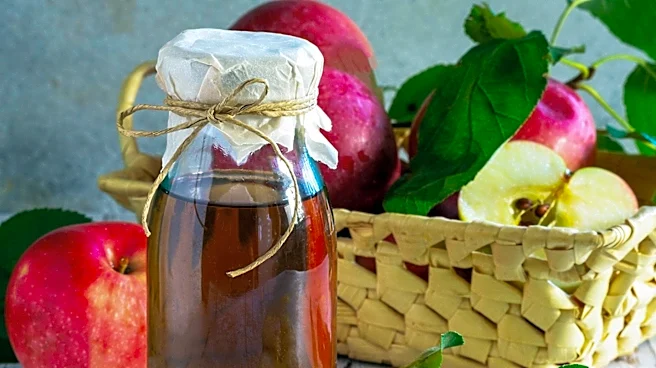









Vinegar, an aqueous solution primarily composed of diluted acetic acid, has a history as rich and complex as its flavor profile. This ubiquitous condiment and preservative, derived from the Old French "vyn egre" meaning 'sour wine,' has been a staple in human civilization for millennia. Its production, typically involving a double fermentation process where sugars are converted to ethanol by yeast and then to acetic acid by bacteria, has evolved significantly
from ancient practices to modern industrial methods. From its earliest documented uses by the Babylonians to its professionalization in various cultures, vinegar's story is one of continuous innovation and adaptation, reflecting its enduring importance in culinary, medicinal, and household applications.
Ancient Origins and Early Uses
The earliest documented evidence of vinegar making and its use dates back to the ancient Babylonians around 3000 BCE. These early producers primarily crafted vinegar from the fermentation of fruits such as dates and figs, as well as from beer. Its utility was recognized for both culinary and medicinal purposes, indicating its versatile role in ancient societies. From Mesopotamia, the knowledge and use of vinegar spread to neighboring lands, with traces even being discovered in Egyptian urns, suggesting its widespread adoption in the ancient world. This early period established vinegar as a valuable commodity, laying the groundwork for its future development.Beyond the Babylonians, the ancient Greeks and Romans also made extensive use of vinegar, particularly that derived from wine. The Spartans famously incorporated vinegar into their traditional black soup, known as *melas zomos*, a blood soup. In this context, vinegar served a dual purpose: it flavored the broth and, crucially, its acidity prevented the blood from coagulating, a function still utilized in modern blood soups globally. The Roman writer Columella, in his work *Res Rustica*, meticulously detailed the ingredients and processes for creating several types of vinegar, highlighting its established place in Roman agriculture and cuisine.
Professionalization in East and West
In East Asia, the Chinese began to professionalize vinegar production during the Zhou dynasty. Historical texts like the *Zhou Li* mention a specialized occupation: the "vinegar maker," indicating that many noble or royal households employed dedicated individuals for its production. Much of this early vinegar making was concentrated in what is now Shanxi province, near the city of Taiyuan, a region that remains renowned for its vinegar production today. The agricultural manual *Qimin Yaoshu* further documented various Chinese vinegars and their diverse culinary and medicinal applications, showcasing a sophisticated understanding of the product.Concurrently, in the late Middle Ages, vinegar making in Europe gradually became a professionalized craft. The French city of Orléans gained particular renown for the exceptional quality of its vinegar, achieved through a formalized fermentation and aging process that became known as the Orléans process. During this era, malt vinegar, initially referred to as *alegar*, began to develop in England. Italy also saw the beginnings of balsamic vinegar's evolution in the Duchy of Modena, though its widespread recognition would not occur until the Napoleonic Wars, when French troops facilitated its sale abroad.
Industrialization and Scientific Understanding
The 19th century marked a period of dramatic transformation for vinegar production, characterized by rapid industrialization and scientific analysis. Karl Sebastian Schützenbach, in 1823, invented the first large-scale industrial process for vinegar production in the Kingdom of Baden. This innovation, known as the packed generator, significantly reduced fermentation times from several months to just one to two weeks by circulating alcohol over beechwood shavings. This advancement also spurred the rise of spirit vinegar, or distilled white vinegar, made from pure alcohol.Japan also embarked on industrializing vinegar production during the final years of the Tokugawa shogunate. Matazaemon Nakano, from a traditional sake brewing family, discovered that sake lees could be utilized to produce rice vinegar. This innovation was crucial in providing ample vinegar for the burgeoning popularity of sushi in Japan. The company he founded, now known as Mizkan, headquartered in Handa, near Nagoya, has grown to become the largest vinegar producer globally. Scientifically, Louis Pasteur made the pivotal discovery that specific bacteria, later identified as acetic acid bacteria, were the agents responsible for vinegar fermentation, solidifying the understanding of vinegar as a natural biological process.
Modern Production and Global Varieties
The 20th century brought further revolutions in vinegar production with the invention of the submerged fermentation process. This method drastically cut production times to a mere one to two days, enabling the mass production of affordable vinegar worldwide. Today, commercial vinegar is produced using either fast or slow fermentation processes. Slow methods, often employed for traditional vinegars, allow fermentation to proceed over several months to a year, fostering the accumulation of a nontoxic slime known as mother of vinegar, composed of acetic acid bacteria and their cellulose biofilm. Fast methods, conversely, introduce mother of vinegar as a bacterial culture to the source liquid, with added air to oxygenate and accelerate fermentation, producing vinegar in as little as one to three days.The diversity of vinegar types reflects the varied source materials used globally. Balsamic vinegar, an aromatic, aged product from Modena and Reggio Emilia, Italy, is made from concentrated grape must. Traditional balsamic vinegar, aged for 12 to 25 years in different wood casks, is a costly product. A more common commercial form, *aceto balsamico di Modena*, is widely available. Chinese black vinegar, an aged product with an inky black color and complex malty flavor, is made from rice, wheat, millet, sorghum, or combinations thereof, with Zhenjiang vinegar being a popular variety. Cane vinegar, traditional in the Philippines, is made from sugarcane juice and ranges from dark yellow to golden brown with a mellow flavor. These examples highlight the global reach and cultural significance of vinegar, a product continually shaped by local ingredients and traditions.