




The story of the Duryea Motor Wagon Company is inextricably linked to the pioneering efforts of its founders, brothers Charles and Frank Duryea. While both are credited with establishing the first American firm to build gasoline automobiles, their individual contributions, working styles, and eventual separation paint a nuanced picture of early automotive innovation. Charles, often seen as the visionary engineer, and Frank, the hands-on builder and tester,
together laid the foundation for a new industry, even as their paths diverged over business disagreements.
Collaborative Beginnings and Early Successes
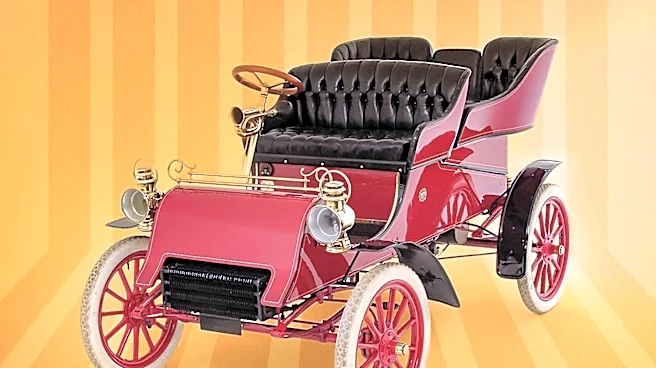
Initially, the Duryea brothers collaborated closely on their automotive endeavors. Charles Duryea, born in 1861, was the engineer behind the second working American gasoline-powered car. Frank Duryea, born in 1869, was the actual builder during their collaboration, meticulously constructing and testing the designs. Their first successful gas-engine vehicle, a one-cylinder, four-horsepower Duryea Motor Wagon, was demonstrated on September 21, 1893, in Springfield, Massachusetts. This vehicle was a testament to their combined ingenuity, with Frank corresponding with Charles about the practicalities of the design, even though Charles had left Springfield in 1892 before construction began.
Their collaborative efforts culminated in significant early achievements. In 1895, a Duryea car built in 1894 and driven by Frank, won the Chicago Times Herald race. This event was a landmark, being the first U.S. auto race where any entrants finished, with Frank traveling 54 miles at an average speed of 7.5 mph. This victory not only showcased the reliability of their vehicles but also propelled them into commercial production. By the end of 1896, the brothers had sold thirteen cars, with their first ten production vehicles being the first automobiles sold in the United States, solidifying their place as pioneers in the American automotive market.
Diverging Paths and Independent Ventures
Despite their initial successes, the Duryea brothers went their separate ways by the end of the century. The primary reason for their split was a dispute over financing that would have required moving the company to Detroit. This disagreement highlighted differing visions for the future of their enterprise. After the separation, Frank Duryea continued his involvement in the automotive industry, helping to produce the Stevens-Duryea vehicles until 1927, demonstrating his enduring commitment to automobile manufacturing.
Charles Duryea, on the other hand, continued to produce vehicles under his own name, operating from Reading, Pennsylvania. He moved to Reading in February 1900 and by 1901, incorporated the Duryea Power Company. Here, he manufactured three-wheel, three-cylinder, gasoline-powered automobiles, which were particularly popular among doctors due to their power and reliability. By 1905, his fifty workers were producing sixty cars a year, including the four-wheel Phaeton. However, another dispute, this time among partners in his new company, led to its collapse in 1907. Undeterred, Charles designed the "Buggyaut," an inexpensive, air-cooled automobile aimed at rural markets, and later the Duryea GEM in 1916, a hybrid vehicle. Despite his continuous innovation, lack of funding ultimately forced him to abandon these projects, with the GEM being his last automobile. The distinct careers of Charles and Frank Duryea underscore the dynamic and often challenging nature of early automotive entrepreneurship.