




The Hunger Games: Mockingjay – Part 2 marked the culmination of a hugely popular film franchise, bringing Suzanne Collins' dystopian saga to a close on the big screen. The production of this final installment, filmed back-to-back with its predecessor, involved extensive logistical planning, a diverse array of filming locations, and faced unexpected challenges, including the death of a key cast member during production. Its eventual release was a major
cinematic event, met with critical discussion and significant box office success, solidifying its place as a memorable conclusion to the series.
A Global Production: Filming Across Continents
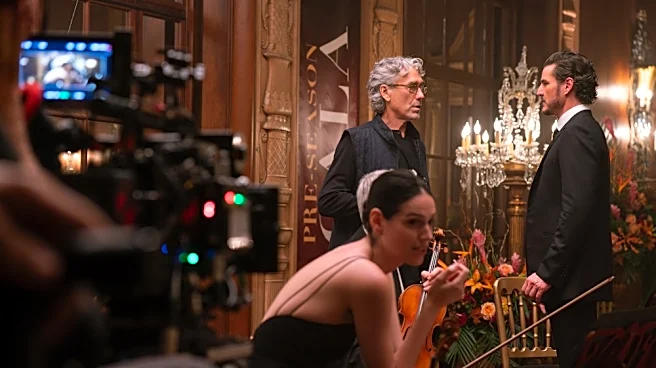
Principal photography for both *The Hunger Games: Mockingjay – Part 1* and *Part 2* commenced in September 2013 and concluded in June 2014. This back-to-back filming approach allowed for a continuous production schedule, maximizing efficiency for the two-part adaptation of the final novel. The production team utilized a wide range of locations to bring the world of Panem to life, spanning multiple cities and countries. Filming took place in various prominent locations across the United States, including Boston, Massachusetts, and Atlanta, Georgia, which provided diverse backdrops for the war-torn districts and the Capitol's urban environments. Additionally, the production ventured internationally, with significant portions filmed in Paris, France, and Berlin, Germany, lending an epic scale and distinct architectural styles to the Capitol's imposing structures and battlegrounds. Los Angeles, California, also served as a filming location, likely for studio work and specific interior scenes, contributing to the film's grand visual scope.
One of the most significant challenges faced during production was the unexpected death of actor Philip Seymour Hoffman in February 2014. Hoffman played the pivotal role of Plutarch Heavensbee. Fortunately, he had completed the majority of his scenes before his passing. However, his death necessitated rewrites for some remaining scenes, demonstrating the adaptability required in large-scale film productions when unforeseen circumstances arise. Despite this tragic event, the production managed to complete filming, ensuring that Hoffman's performance remained a part of the final film.
Premiere, Release, and Critical Reception
The Hunger Games: Mockingjay – Part 2 premiered at the Sony Center in Berlin on November 4, 2015, setting the stage for its global release. It was subsequently released in the United States on November 20, 2015, by Lionsgate. The film was made available in multiple formats, including 2D, 3D, and IMAX, offering audiences various ways to experience the conclusion of the saga. This multi-format release strategy aimed to maximize its theatrical reach and appeal to different viewer preferences.
Upon its release, the film garnered generally positive reviews from critics. Praise was frequently directed towards the performances of its lead actors, particularly Jennifer Lawrence as Katniss, Josh Hutcherson as Peeta, and Donald Sutherland as President Snow. The screenplay, music, and action sequences also received commendation. Many critics regarded *Mockingjay – Part 2* as a fitting end to *The Hunger Games* series, appreciating its ability to deliver a satisfying conclusion to the complex narrative. However, some critics expressed divided opinions regarding the decision to split Suzanne Collins' *Mockingjay* novel into two separate films, a common point of discussion for multi-part adaptations. Despite these varied opinions, the film achieved significant commercial success, grossing $684.5 million worldwide, making it the ninth-highest-grossing film of 2015. This box office performance underscored the enduring popularity of *The Hunger Games* franchise and its successful cinematic adaptation.