






A barrette, also commonly known as a hair clip, hair-slide, or clasp in British English, serves as a fundamental accessory for holding hair in place. While its modern form is widely recognized, the concept of using a clasp to secure hair has a history stretching back to ancient civilizations. These practical and often decorative items are made from various materials, including metal and plastic, and can sometimes feature ornamental fabrics, reflecting
their dual purpose of function and style.
Early Hair Fasteners and Their Evolution
The origins of hair fasteners can be traced to ancient Assyria and Egypt, where hairpins crafted from materials like metal, ivory, bronze, and sculpted wood were employed to maintain hairstyles. Archaeological findings suggest that the use of such hair accessories was initially reserved for the more affluent classes in Egyptian society. This trend continued with the Greeks, Etruscans, and Romans, indicating that these early forms of barrettes were often symbols of status or wealth.
These ancient hairpins laid the groundwork for later innovations in hair-holding technology. The fundamental need to secure hair, whether for practical reasons or aesthetic purposes, has remained constant throughout history, leading to continuous development in the design and materials of these accessories. The transition from simple pins to more complex clasps marked a significant step in their evolution.
The Modern Barrette and Its Design
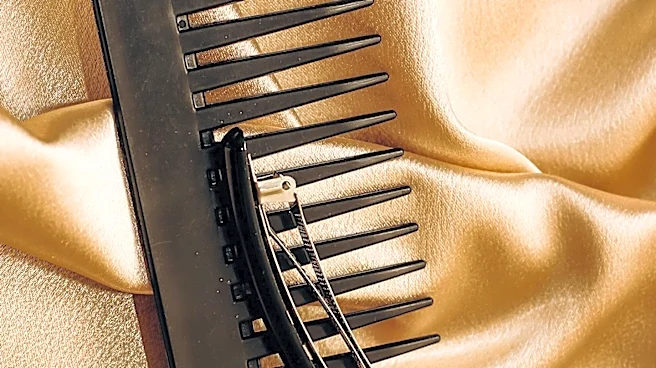
A pivotal moment in the history of the barrette occurred in 1901 with the invention of the spiral hairpin by New Zealander Godward Ernest. This invention is considered a direct ancestor of the modern hair clips we use today. The design of a typical barrette often involves a clasp mechanism where two metal pieces on either side are pressed together to open, allowing hair to be inserted, and then released to secure it in place.
Modern barrettes come in a wide array of sizes and designs, catering to different hair types and styling needs. Small barrettes are frequently used at the front of the head to pull back smaller sections of hair, such as bangs or wisps, keeping them out of the eyes. Larger barrettes, which can measure between 3 to 4 inches (8 to 10 cm) in length, are designed to hold back longer or more voluminous hair. These are typically worn at the back of the head, often in an upward-facing position, to secure styles like buns, French twists, or ponytails.
Versatility in Styling and Function
The versatility of barrettes extends beyond simply holding hair. While their primary function is practical, they are also widely used for purely decorative purposes, particularly by women. The choice of barrette size is crucial for its intended use; not only does the length determine how much hair it can hold, but the width of the barrette also indicates the approximate volume of hair it can secure. This consideration allows users to select the appropriate barrette for their specific hairstyle and hair thickness.
Beyond the classic barrette, the 20th century saw the invention of many other types of hair clips. Notable examples include the elongated hair clip, invented in 1972 by Marnie Bjornson, and the simple bendy clip. The bendy clip operates by snapping from a concave to a convex position, locking into place, and then opening again. These diverse innovations highlight the ongoing evolution of hair accessories, all stemming from the basic principle of securing hair effectively and stylishly.