







Nail art has evolved significantly from simple coloring to a complex craft involving a wide array of techniques, materials, and innovative effects. What began as basic nail adornment has transformed into a sophisticated art form, utilizing specialized tools and chemical advancements to create stunning and durable designs. Today, nail artists employ methods ranging from traditional hand painting to advanced applications like gel extensions and intricate
3D acrylic work, constantly pushing the boundaries of what can be achieved on a tiny canvas. This evolution reflects a blend of artistic creativity and scientific innovation, offering endless possibilities for personal expression.
Fundamental Techniques and Materials
Nail artists typically begin with the foundational techniques of a manicure, which involve shaping, caring for, and preparing the nails. From there, they progress to more sophisticated painting methods, often achieving surprising and long-lasting results due to advancements in materials. Acrylics are a popular choice, consisting of a chemical mixture of liquid monomer and polymer powder. This can be applied directly to natural nails or used to create artificial nails, also known as nail extensions or tips. Another common material is nail gel, a chemical combination similar to acrylics. The nail artist applies several layers of gel, which then cures under a UV or LED UV light, hardening the nails. Gel polish, a variant of nail gel, also requires UV or LED light for curing. A key difference between acrylics and gels is that acrylics air-dry naturally, while gels require light exposure to cure.Traditional nail polish, a lacquer applied to nails, serves both as a protective layer and a base color. Manicurists often use a base coat to protect and strengthen the nails, preventing natural nails from yellowing or staining. Beyond these core materials, various decorative options are available, including glitter, adhesive polish, nail piercings, stamps, crystals, mini-applications, aluminum foil, mini-tattoos, dried leaves, stickers, rhinestones, mini-chains, and shiny threads. For creating 3D art, acrylic powder is used, following the same principle as nail acrylics, combining liquid monomer and polymer powder to sculpt designs. Artists utilize a range of tools such as nail art brushes, nail dotters, airbrushing equipment, glass pens, and sponges for gradient effects, along with powder brushes.
Innovative Effects and Finishes
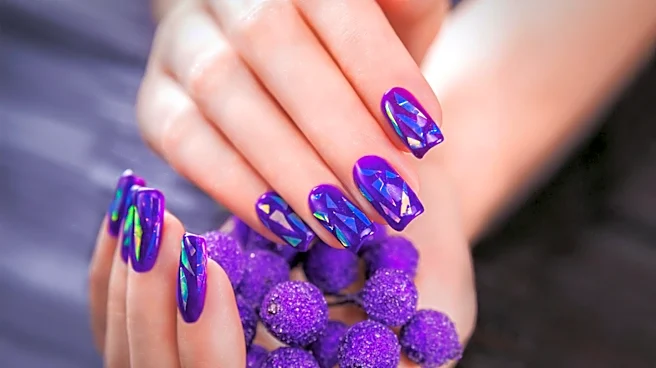
The nail art industry continually innovates, with brands developing new types of gel and acrylics that offer surprising and fun effects. Textures are a significant area of innovation; micro-spheres can be applied just before gel dries to give nails a sandy or granular appearance. Velvet nails are created by sprinkling velvet fibers over wet gel, with excess brushed away to leave a plush, velvety feel. Holographic effects are achieved with gels that release rainbow reflections when exposed to light, thanks to holographic particles within the polish.Another popular innovation is the crackle effect, pioneered by Sally Hansen. This special overcoat is applied to already painted nails, creating a broken or cracked appearance as it dries. Thermochromic gels and acrylics change color when exposed to hot or cold temperatures, offering dynamic visual shifts. Matte effect gels and acrylics provide a completely matte finish, transforming the look of the nail. The inverted French manicure, also known as the "half-moon," creates a crescent shape near the cuticle in one color, with the rest of the nail painted a different color. Other advancements include photochromic polishes that change color based on UV light exposure, magnetic polishes that create patterns with magnets, and long-lasting permanent or semi-permanent polishes that extend wear for weeks. These innovations demonstrate the ongoing creativity and technological progress within the world of nail art, offering diverse ways to personalize and express oneself.