




Bangkok, the bustling capital of Thailand, has a rich history that traces back to its origins as a small trading post. Known in Thai as Krung Thep Maha Nakhon, the city has undergone significant transformations over the centuries. From its early days during the Ayutthaya Kingdom to its current status as a major urban center, Bangkok's evolution is a fascinating journey through time.
From Trading Post to Capital City
Bangkok's story begins as a modest trading post located at the mouth
of the Chao Phraya River. During the Ayutthaya Kingdom, which existed from 1350 to 1767, this area served as a strategic location for trade and commerce. The name "Bangkok" is believed to have originated from either "Bang Makok," referring to the Java plum trees in the area, or "Bang Koh," meaning "island," due to the region's river-carved landscape.
The fall of Ayutthaya to the Burmese Kingdom in 1767 marked a turning point for Bangkok. King Taksin established a new capital in the area, known as Thonburi, on the west bank of the river. This decision set the stage for Bangkok's rise as a significant urban center. In 1782, King Buddha Yodfa Chulaloke, also known as Rama I, moved the capital across the river to its current location, laying the foundation for modern Bangkok.
The Rattanakosin Kingdom and Modernization
The establishment of the Rattanakosin Kingdom in 1782 marked the beginning of a new era for Bangkok. Under the reign of Rama I, the city was reconstructed and given a ceremonial name that reflects its grandeur. This name, Krung Thep Maha Nakhon, translates to "City of Angels," and is still used by locals today.
Throughout the 19th and 20th centuries, Bangkok continued to grow and modernize. The city expanded beyond its original boundaries, incorporating new districts and infrastructure. The introduction of modern amenities and transportation systems further propelled Bangkok's development, transforming it into a vibrant metropolis.
Bangkok's Cultural and Economic Significance
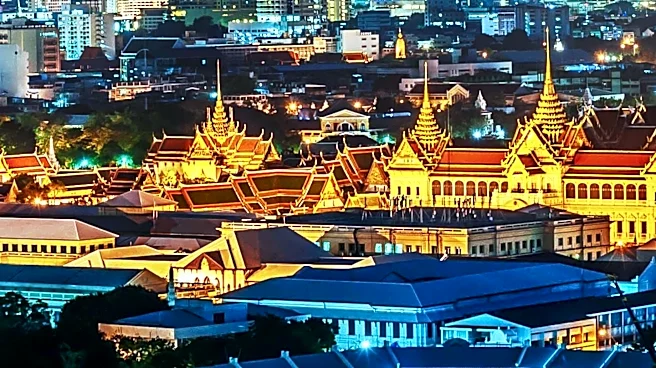
Today, Bangkok stands as a testament to its historical evolution. As the capital and largest city of Thailand, it plays a crucial role in the country's cultural and economic landscape. The city's rich history is reflected in its architecture, with a blend of traditional Thai structures and modern skyscrapers.
Bangkok's significance extends beyond its borders, as it serves as a major hub for international trade and tourism. The city's diverse attractions, from royal palaces and temples to bustling markets and vibrant nightlife, draw millions of visitors each year. This blend of history and modernity makes Bangkok a unique and dynamic city, continuing to evolve while honoring its past.