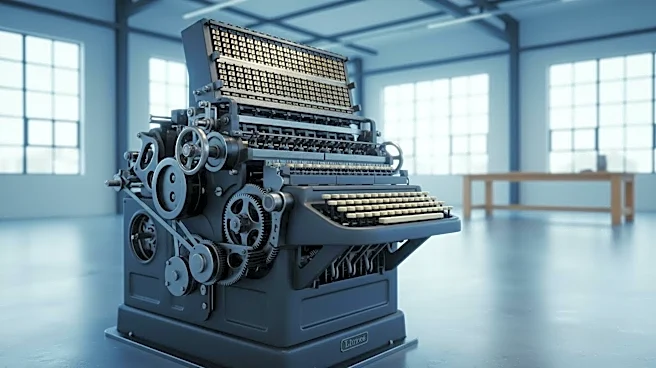








The Linotype machine, invented in 1886 by Ottmar Mergenthaler, revolutionized the printing industry by significantly speeding up the typesetting process. This innovation allowed newspapers and other publications to produce content more efficiently, transforming the landscape of print media. The Linotype machine remained a staple in the industry until the advent of digital typesetting in the late 20th century.
The Birth of the Linotype Machine
Ottmar Mergenthaler, a German-American
inventor, developed the Linotype machine in the late 19th century. Before its invention, typesetting was a labor-intensive process that involved manually arranging individual letters. Mergenthaler's machine automated this process by casting entire lines of type, hence the name "Linotype." This innovation was a game-changer, allowing for much faster production of printed materials.
The Linotype machine was first commercially used in the printing office of the New York Tribune in 1886. It quickly gained popularity due to its efficiency and reliability. The machine's ability to cast lines of type in one piece made it particularly useful for newspapers, which required rapid production to meet daily deadlines. This efficiency helped newspapers expand their reach and influence, as they could now produce more content in less time.
The Linotype's Role in the Printing Industry
The introduction of the Linotype machine had a profound impact on the printing industry. It allowed for the mass production of newspapers, books, and other printed materials, making information more accessible to the public. The machine's efficiency reduced the cost of printing, which in turn lowered the price of newspapers and books, making them affordable to a wider audience.
The Linotype machine also played a crucial role in the growth of the publishing industry. With the ability to produce large volumes of text quickly, publishers could expand their offerings and reach new markets. This led to an increase in literacy rates and the spread of information, as more people had access to printed materials.
The Decline and Legacy of the Linotype Machine
Despite its success, the Linotype machine eventually faced competition from newer technologies. In the 1970s and 1980s, phototypesetting and digital typesetting began to replace hot metal typesetting, including the Linotype. These new methods were even faster and more flexible, allowing for greater creativity in design and layout.
However, the legacy of the Linotype machine endures. It set the standard for typesetting technology and paved the way for future innovations in the printing industry. The machine's impact on the accessibility of information and the growth of the publishing industry cannot be overstated. Even today, the Linotype is remembered as a pivotal invention that transformed the way we produce and consume printed materials.