






The Einstein-Szilard letter, a document that profoundly influenced the course of World War II and the subsequent atomic age, was not solely the work of its famous signatory. Instead, it was the product of collaboration among several brilliant minds, each playing a crucial role in its conception, drafting, and eventual delivery to President Franklin D. Roosevelt. From the initial scientific insights to the strategic navigation of political channels,
a network of physicists and an influential economist worked to convey the urgent message about the potential for atomic weapons.
Leo Szilard: The Visionary and Driving Force
Leo Szilard, a Hungarian physicist, was arguably the primary architect and driving force behind the letter. It was Szilard who, in 1933, conceived the idea of a nuclear chain reaction, and by 1939, he recognized the immediate danger posed by Germany's potential development of atomic bombs. He consulted with fellow Hungarian physicists Edward Teller and Eugene Wigner, sharing his concerns about Germany's actions, particularly their halt of uranium sales from Czechoslovakian mines. Szilard understood that the scientific community needed to alert the U.S. government to this looming threat.
Szilard's persistence was key. He personally drafted the letter, outlining the scientific possibilities of a nuclear chain reaction and the construction of powerful new bombs. He also highlighted the specific intelligence regarding Germany's uranium activities. His efforts extended to securing Einstein's signature, recognizing the immense prestige that Einstein's name would lend to the warning. Szilard's dedication ensured that the critical message was not only formulated but also propelled through the necessary channels.
Albert Einstein: The Prestigious Signatory
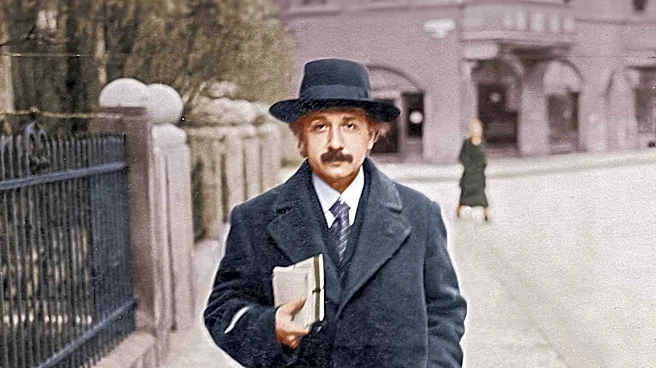
Albert Einstein, already a world-renowned physicist, lent his unparalleled authority and fame to the letter. Initially, Einstein had not considered the practical application of atomic fission for bomb construction. When Szilard and Wigner visited him in July 1939 to explain the possibility of atomic bombs, Einstein reportedly responded, "I did not even think about that." His involvement was crucial for giving the letter the weight and credibility it needed to capture the attention of the President.
Einstein's role was primarily that of the signatory, but his agreement to sign transformed the letter from a scientific warning into a powerful political statement. His name on the document underscored the gravity of the situation and the scientific consensus behind the warning. While Szilard handled much of the drafting and logistics, Einstein's signature was the essential element that ensured the letter would be taken seriously at the highest levels of government.
Alexander Sachs: The Diplomatic Conduit
Alexander Sachs, an American economist and personal friend of President Roosevelt, played a critical role in ensuring the letter reached its intended recipient and received due consideration. Szilard approached Sachs because of his direct access to the President. Sachs understood the importance of the message and took on the responsibility of delivering the letter personally.
Sachs's strategic handling of the delivery was instrumental. He received the letters from Szilard on August 15, but he deliberately delayed his appointment with President Roosevelt until October. This delay was a calculated move, as Germany's invasion of Poland had just started World War II, engrossing the administration in a crisis. Sachs wanted to ensure that Roosevelt would be able to give the letter his full attention. During his meeting with Roosevelt on October 11, and especially during a follow-up breakfast on October 12, Sachs skillfully presented the case, using a historical anecdote about Napoleon and Robert Fulton to persuade a initially skeptical President. His persistence and diplomatic acumen were vital in securing Roosevelt's commitment to action.
Edward Teller and Eugene Wigner: The Early Collaborators
Edward Teller and Eugene Wigner, both Hungarian physicists and colleagues of Szilard, were integral to the early stages of the letter's development. They shared Szilard's concerns about Germany's nuclear ambitions and collaborated with him in formulating the initial warnings. Wigner, for instance, drove Szilard to Einstein's location in Cutchogue, New York, for the initial discussion in July 1939. He also helped prepare an accompanying letter for the State Department, explaining their actions.
Teller also played a role, driving Szilard to meet Einstein again on August 2, when the final draft of the letter was presented for signature. These physicists provided crucial intellectual support and shared the urgent conviction that the U.S. needed to act. Their collective understanding of nuclear physics and the geopolitical landscape underscored the necessity of the letter, making them essential, albeit less visible, contributors to this historic communication.