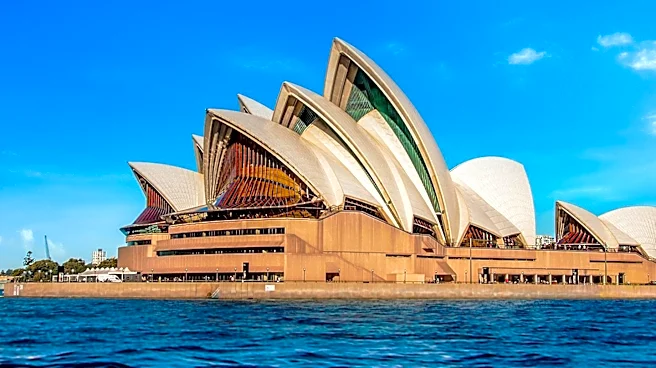







The Sydney Opera House stands today as a globally recognized symbol of architectural brilliance, a multi-venue performing arts center located on the foreshore of Sydney Harbour in New South Wales, Australia. Widely considered one of the world's most famous and distinctive buildings, it is a masterpiece of 20th-century architecture and a UNESCO World Heritage Site. However, its journey from concept to completion was fraught with immense design challenges,
political interference, and significant controversy, particularly concerning its original architect, Jørn Utzon. The building's construction, spanning from 1959 to its formal completion in 1973, was a testament to both groundbreaking innovation and the complexities of large-scale public projects.
The Vision and Early Challenges
The genesis of the Sydney Opera House began with an international design competition launched on September 13, 1955, by Cahill, offering a grand prize of 5,000 Australian pounds. The competition attracted 233 entries from architects representing 32 countries. The criteria were ambitious, calling for a large hall capable of seating 3,000 people and a smaller hall for 1,200, each designed for diverse uses including full-scale operas, orchestral and choral concerts, mass meetings, lectures, and ballet performances. Jørn Utzon's submitted concept, though described as