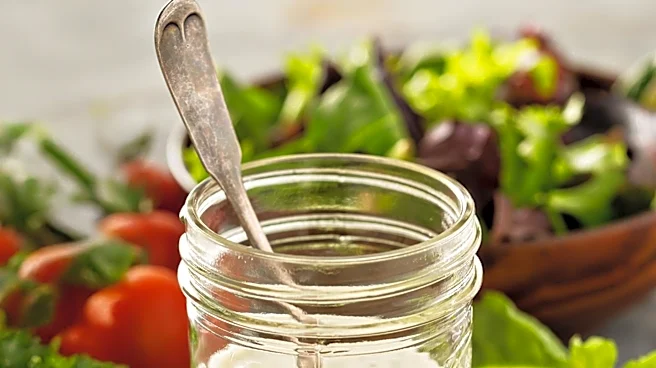






Ranch dressing, a creamy and savory American salad dressing, has become an undeniable staple in kitchens across the United States and Canada. Its journey began in the early 1950s, invented by Steve Henson in Alaska. What started as a unique offering at a guest ranch eventually transformed into the best-selling salad dressing in the U.S. by 1992, surpassing Italian dressing. Beyond salads, ranch has cemented its place as a popular dip and a flavoring
for various foods, including potato chips, reflecting its widespread appeal and versatility in American cuisine.
The Genesis at Hidden Valley Ranch
Steve Henson, the creator of ranch dressing, first developed his recipe in the early 1950s. He served this distinctive salad dressing at his Hidden Valley Ranch steakhouse, a guest ranch located near Santa Barbara, California. The dressing quickly gained popularity among guests, who were eager to purchase jars to take home with them. This early demand signaled the potential for Henson's creation beyond the confines of his ranch.By 1957, Henson began selling packages of his dry dressing mix in stores, making it more accessible to a wider audience. The first commercial customer for ranch dressing was Audrey Ovington, a friend of Henson's and the owner of Cold Spring Tavern. As demand grew, Henson started selling the dry ingredients by mail for 75 cents a piece, eventually dedicating every room in his house to the burgeoning operation. By the mid-1960s, the guest ranch itself had closed, but Henson's mail-order business for "ranch dressing" was thriving, indicating a significant shift from a restaurant novelty to a consumer product.
Commercial Expansion and Acquisition
Recognizing the growing market, the Hensons incorporated Hidden Valley Ranch Food Products, Inc., and established a factory to produce ranch dressing in larger volumes. Initially, they distributed their product to supermarkets in the Southwest, gradually expanding their reach nationwide. The manufacturing of the mix saw several relocations, moving from San Jose to Colorado, and then to Sparks, Nevada, by 1972.A pivotal moment in ranch dressing's history occurred in October 1972 when the Hidden Valley Ranch brand was acquired by Clorox for $8 million. Following this acquisition, Steve Henson retired. Clorox played a significant role in further popularizing the dressing, reformulating it multiple times to enhance consumer convenience. This included adding buttermilk flavoring to the seasoning, which allowed the dressing to be prepared with less expensive regular milk. In 1983, Clorox introduced a non-refrigerated bottled formulation, making ranch dressing even more accessible and convenient for consumers.
Ranch's Dominance and Cultural Footprint
The 1990s marked a period of significant growth and diversification for ranch dressing. Hidden Valley introduced child-oriented variations, including pizza, nacho cheese, and taco flavors, broadening its appeal. In 1992, ranch dressing officially surpassed Italian dressing to become the best-selling salad dressing in the United States, a position it has held since. Its popularity extended beyond salads, with Domino's beginning to offer ranch sauce as a condiment for its chicken wings and pizzas in 1994, a combination that quickly became a customer favorite.By 2017, a study by the Association for Dressings and Sauces revealed that 40% of Americans named ranch as their favorite dressing, underscoring its deep integration into American culinary preferences. Its fame even reached international recognition, becoming a popular souvenir item for visitors to the U.S. and Canada during the 2026 FIFA World Cup. This led the U.S. Transportation Security Administration to issue an advisory regarding standard-size bottles exceeding carry-on liquid limits, highlighting ranch dressing's unexpected status as a cultural icon and a sought-after item for international travelers.