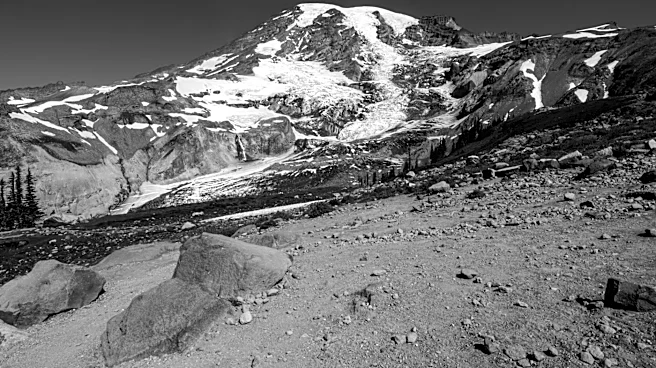



Hazard Stevens, a figure known for his military valor, also etched his name into the annals of American exploration as one of the first two individuals to successfully climb Mount Rainier. On August 17, 1870, Stevens, alongside Philemon Beecher Van Trump, achieved what had previously been an elusive goal, marking the first documented successful ascent of the majestic peak. This feat was not merely a physical challenge but a significant moment in the exploration and
understanding of the Pacific Northwest's natural wonders. His adventurous spirit, evident in his Civil War service, found a new outlet in the rugged wilderness, leading him to conquer one of the continent's most formidable mountains.
Life After War and a New Challenge
Following his distinguished service in the Union Army, which concluded with his muster out in September 1865, Hazard Stevens returned to civilian life. He initially returned to Washington Territory to care for his mother, demonstrating a personal commitment alongside his public service. His post-war career began with work for the Oregon Steam Navigation Company, and by 1868, he had taken on the role of a federal revenue collector. It was during this period in Washington that Stevens' path crossed with Philemon Beecher Van Trump, who was then working for Marshall F. Moore, the seventh governor of Washington Territory. Both men shared a keen interest in the natural grandeur surrounding them, particularly the imposing Mount Rainier.
The allure of Mount Rainier, a towering symbol of the Pacific Northwest, captivated Stevens and Van Trump. At the time, the mountain remained largely unconquered, presenting a formidable challenge to even the most experienced climbers. For Stevens, who had already faced the rigors of war and demonstrated exceptional leadership under pressure, the mountain represented a new frontier to explore and master. This shared ambition laid the groundwork for their historic expedition, transforming their mutual interest into a concrete plan to attempt the summit.
The Historic 1870 Expedition
On August 17, 1870, Hazard Stevens and Philemon Beecher Van Trump embarked on their monumental journey to ascend Mount Rainier. Their expedition was meticulously planned and executed, reflecting the serious nature of the undertaking. The climb itself was a testament to their endurance, skill, and determination, as they navigated the mountain's treacherous terrain, glaciers, and unpredictable weather conditions. Their success marked a pivotal moment in mountaineering history, as it was the first documented successful climb of Mount Rainier. This achievement not only brought personal triumph to Stevens and Van Trump but also drew significant attention to the natural beauty and challenges of the region.
The successful ascent provided valuable insights into the mountain's geography and conditions, paving the way for future explorations and scientific studies. Their detailed account of the journey contributed to the growing understanding of the Pacific Northwest's wilderness. For Stevens, this accomplishment was another demonstration of his pioneering spirit, showcasing his ability to lead and achieve ambitious goals, whether on the battlefield or on the slopes of a towering peak. The 1870 climb remains a landmark event, celebrated as a foundational moment in the history of American mountaineering.
A Return to the Summit and Enduring Legacy
Hazard Stevens' connection to Mount Rainier did not end with his historic first ascent. Decades later, in 1905, he returned to the mountain and successfully climbed it a second time. This later ascent underscored his deep and lasting affinity for the peak, demonstrating not only his continued physical prowess but also a profound personal bond with the natural landmark he had helped to conquer. His return to the summit further solidified his reputation as a dedicated mountaineer and an enduring figure in the exploration of the American West.
Beyond his mountaineering achievements, Stevens led a varied life as a federal revenue collector, attorney, politician, and writer. He even managed a farm near Olympia later in life. His life, which spanned from 1842 to 1918, was one of continuous engagement with both public service and personal challenges. The first ascent of Mount Rainier, however, remains one of his most celebrated accomplishments, a testament to his adventurous spirit and his significant contribution to the exploration of America's wild landscapes. His legacy as a pioneering mountaineer continues to inspire those who seek to explore and understand the natural world.