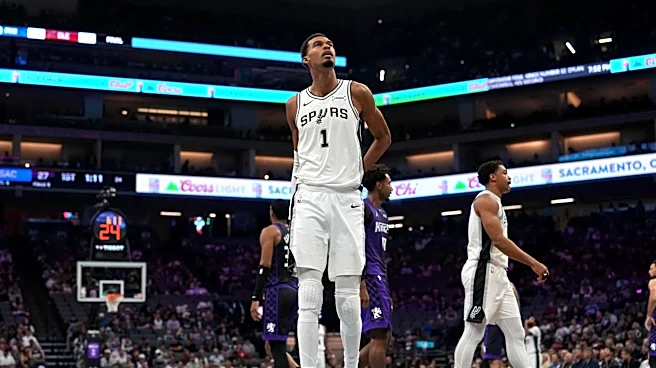

ARCO Arena, a prominent indoor arena in Sacramento, California, served as a significant hub for sports and entertainment for over three decades. Originally opening in 1988, it was the home of the Sacramento Kings
of the National Basketball Association (NBA) for many years. Over its lifespan, the arena underwent several name changes, reflecting different sponsorship agreements, including Power Balance Pavilion and Sleep Train Arena. Beyond basketball, it hosted a diverse array of events, becoming a central gathering place for nearly two million spectators annually from across Northern California at its peak. Its story is one of a facility that, despite its initial design as a temporary solution, became deeply embedded in the community's fabric before its eventual demolition.
Early Days and Construction
ARCO Arena was constructed at a cost of just $40 million, making it the lowest-cost venue in the NBA at the time. It was situated in what was then an isolated area on the expanding northern outskirts of Sacramento. The arena opened in 1988, replacing an earlier facility also known as ARCO Arena, which had a capacity of 10,333 seats and housed the Kings for three seasons after their move from Kansas City. The naming rights for the original arena were developed and sold by Bob Whitsitt, then the Kings' vice president, to ARCO, an independent oil and gas company. The new arena, with a seating capacity of 17,317 for basketball games, was considered the smallest in the NBA, featuring 30 luxury suites and 412 club seats.From its inception, ARCO Arena was designed as a multi-purpose venue. It hosted a wide variety of events, including concerts, ice shows, rodeos, and monster truck rallies. The configuration for ice shows and ice hockey was unique, running perpendicular to the basketball court, with normal sideline seating being retractable to accommodate an international standard ice rink. This adaptability allowed the arena to cater to a broad range of entertainment needs for the region.
Naming Rights and Modernization Efforts
Over its operational years, the arena's name changed multiple times due to sponsorship agreements. It was initially known as ARCO Arena, named after the Los Angeles-based oil and gas company. In March 2007, the Maloof brothers, who owned the Kings, announced a multi-year agreement to extend ARCO's naming rights. However, ARCO's sponsorship concluded in February 2011, leading to the arena being renamed Power Balance Pavilion on March 1, 2011, after Power Balance, a manufacturer of sports wristbands. This name lasted until October 15, 2012, when The Sleep Train, a chain of mattress and bed retailers, purchased the naming rights, and the arena became Sleep Train Arena, its final name.Despite its popularity, the arena was never intended to be a long-term facility. It was considered a relic of the 1980s, lacking many amenities found in more modern stadiums, such as digital signage, spacious locker rooms, and wide concourses. The NCAA even cited the arena as inadequate for college basketball, let alone the NBA, which prompted discussions and plans for a new facility. In 2006, a campaign to build a new $600 million facility in downtown Sacramento, funded by a quarter-cent sales tax increase, was overwhelmingly rejected by voters, leading the NBA to publicly call for a new arena to be built elsewhere.
Final Years and Demolition
The Sacramento Kings played their last home game at Sleep Train Arena on April 9, 2016, securing a 114–112 victory against the Oklahoma City Thunder. The final points scored in the arena were two free throws by the Kings' Rudy Gay. The last ticketed event was the Ringling Bros. and Barnum & Bailey Circus on September 19, 2016, which coincidentally also opened the arena back in 1988. The last planned non-ticketed event was Sacramento State's winter commencement ceremonies in December 2016.After its closure, the arena still hosted occasional events, including conferences and swap meets, and was used by Jehovah's Witnesses for an extended stay in 2019. In April 2020, state health officials announced that Sleep Train Arena would be converted into a temporary hospital in response to the COVID-19 pandemic. In June 2021, the Sacramento Kings and the City of Sacramento announced that the site had been donated to California Northstate University for the construction of a medical school and hospital. The Kings hosted a free farewell event on March 19, 2022, reverting to the original ARCO Arena name, allowing fans to reminisce before its impending demolition. The demolition process began on August 9, 2022, and was completed in October 2022. The site, though mostly abandoned, still hosts the Sacramento Antique Faire in its parking lot.