







"The Sound of Music" has captivated audiences across various platforms, evolving from its original Broadway production into a globally recognized film and, more recently, a live television event. This journey highlights the enduring appeal of the story and its musical numbers, showcasing how different creative teams have interpreted and presented the beloved narrative. Each adaptation brought its own unique flavor while striving to maintain the essence
of the von Trapp family's story and their musical escape from Nazi-occupied Austria.
The musical's initial foray into the public consciousness began with its 1959 Broadway production. This stage version laid the groundwork for the story, introducing characters like Sister Margaretta, portrayed by Muriel O'Malley. The Broadway show established the core narrative and musical elements that would later become iconic. The success of the stage production paved the way for its transition to other media, demonstrating the story's potential to resonate with a wider audience beyond the theatrical stage.
The Iconic 1965 Film Adaptation
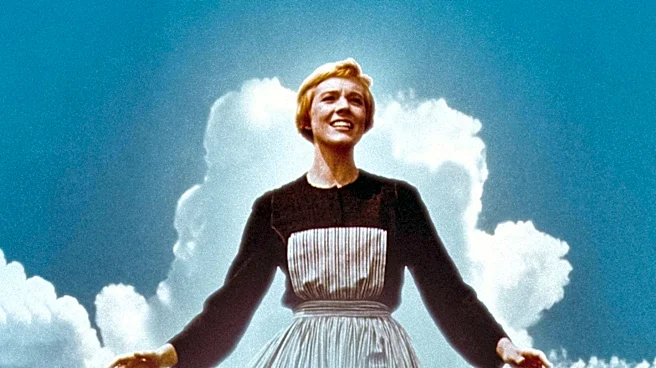
The 1965 film adaptation, directed by Robert Wise, stands as perhaps the most famous and commercially successful iteration of "The Sound of Music." This cinematic version took the stage musical and expanded it, utilizing the visual medium to bring the Austrian landscapes and the von Trapp family's journey to life in a grander scale. Filming took place from March to September 1964 in both Los Angeles and Salzburg, capturing the picturesque settings that became synonymous with the film.
The film was released by 20th Century-Fox in the United States on March 2, 1965, initially as a limited roadshow theatrical release. Despite receiving mixed reviews from film critics at first, it quickly became a major commercial success. Within four weeks, it was the number-one box office film in the country, a position it held for thirty out of the next forty-three weeks in 1965. By November 1966, "The Sound of Music" had surpassed "Gone with the Wind" to become the highest-grossing film in history, a distinction it maintained for five years. Its popularity extended worldwide, breaking box-office records in 29 countries. The film's initial theatrical release in America lasted an impressive four and a half years, and it saw two successful re-releases. Globally, it sold 283 million admissions and earned a total worldwide gross of $286 million. Adjusted for inflation, the film's earnings are estimated at about $2.366 billion at 2014 prices, placing it among the top ten highest-grossing films of all time.
Production and Creative Choices for the Film
The production of the 1965 film involved significant creative decisions to adapt the stage musical for the screen. Ernest Lehman was hired in December 1962 to write the screenplay. He rearranged the sequence of songs and aimed to transform the stage work into a film that could leverage the camera to emphasize action and mood, opening up the story to the beautiful locations of Salzburg and the Austrian Alps. For instance, the "Do-Re-Mi" sequence, originally a static number in the play, was transformed by Lehman into a lively montage showcasing Salzburg's beautiful sites and depicting Maria and the children growing closer.
Lehman also made changes to the musical numbers, eliminating two songs, "How Can Love Survive?" and "No Way to Stop It," which were sung by the characters of Elsa and Max. Robert Wise, who eventually directed the film, shared Lehman's vision of centering the film on the music and reducing some of the sweetness and sentimentality found in the stage musical. Wise also added two new songs, "Something Good" and "I Have Confidence," with both lyrics and music composed by Richard Rodgers, as Oscar Hammerstein II had passed away in 1960. Christopher Plummer, who played Captain von Trapp, also contributed to shaping his character, transforming him into a stronger, more complex figure with a wry sense of humor.
The Transition to Television and Home Media
"The Sound of Music" also found a significant audience through television broadcasts and home media releases. The first American television broadcast was on February 29, 1976, on ABC, which paid $15 million for a one-time broadcast. It became one of the highest-rated films shown on television at that time. NBC later acquired broadcast rights in June 1977 for $21.5 million for 20 showings over 22 years, broadcasting the film annually for two decades. During much of its run on NBC, the film was heavily edited to fit a three-hour time slot, cutting approximately 30 minutes from the original.
More recently, the story was adapted for a live television event. The 2013 NBC television event, "The Sound of Music Live!", featured Carrie Underwood in the lead role of Maria. This production aimed to bring the stage musical experience directly to television audiences, offering a new interpretation of the classic. The soundtrack for this event was praised for staying true to the original Broadway musical and the 1965 film, with Carrie Underwood's vocals receiving positive remarks. The film has also been widely released on various home media formats, including VHS, LaserDisc, DVD, and Blu-ray. For its 45th anniversary, the original 70 mm negatives were rescanned at 8K resolution and restored at 4K resolution for the Blu-ray release, providing the most detailed copy of the film to date. These continuous adaptations and re-releases underscore the timeless appeal and cultural significance of "The Sound of Music" across generations and evolving media landscapes.