





Douglas Corrigan, an American aviator, became a legendary figure in aviation history due to his unauthorized transatlantic flight in 1938. Known as "Wrong Way" Corrigan, he claimed his flight from New York to Ireland was a navigational error. However, many believe it was a deliberate act of defiance against aviation authorities who had denied him permission for such a journey. This article delves into the details of Corrigan's flight and the circumstances
that led to his audacious decision.
The Flight That Made History
Douglas Corrigan's journey began with a transcontinental flight from Long Beach, California, to New York City. His plan was to return to Long Beach, but instead, he took off from Floyd Bennett Field in Brooklyn and headed east across the Atlantic. Corrigan claimed that heavy cloud cover and a misread compass led him to Ireland instead of California. Despite his explanation, many suspected that Corrigan had planned the transatlantic flight all along.
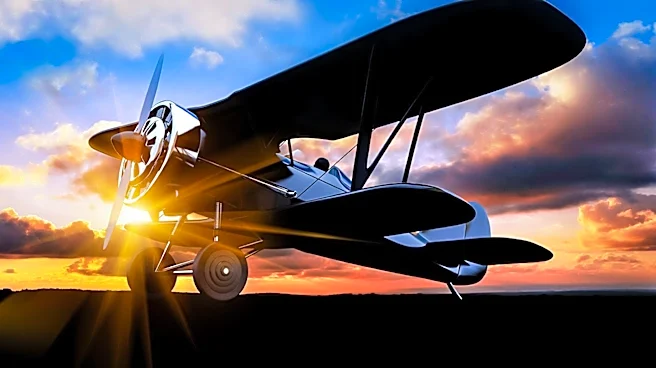
Corrigan's aircraft was a modified Curtiss Robin OX-5 monoplane, equipped with an engine built from two old Wright Whirlwind J6-5 engines and extra fuel tanks. Despite these modifications, the Bureau of Air Commerce had rejected his application for a nonstop flight to Ireland, deeming the plane unsound for such a journey. Corrigan's "navigational error" was seen as a clever way to circumvent the regulations.
Preparations and Challenges
Corrigan's preparations for the flight were extensive. He spent years modifying his aircraft, despite repeated rejections from aviation authorities. By 1937, his plane was deemed too unstable for safe flight, and its license was not renewed. Corrigan's frustration with official resistance likely fueled his decision to make the unauthorized crossing.
On July 9, 1938, Corrigan left California for New York, having repaired his engine and obtained an experimental license. His eastbound journey took 27 hours, during which he faced a gasoline leak that filled the cockpit with fumes. Upon arrival at Floyd Bennett Field, Corrigan decided to forego repairing the leak to meet his schedule.
The Aftermath and Legacy
Corrigan's arrival in Ireland was met with surprise and admiration. Despite breaking numerous regulations, he received only a mild punishment—a 14-day suspension of his pilot's certificate. Upon returning to New York, he was celebrated with a ticker-tape parade, attended by more people than Charles Lindbergh's after his historic flight.
Corrigan's flight remains a symbol of individual determination and defiance. His story was immortalized in the 1939 film "The Flying Irishman," and he continues to be remembered as an aviator who dared to challenge the status quo.