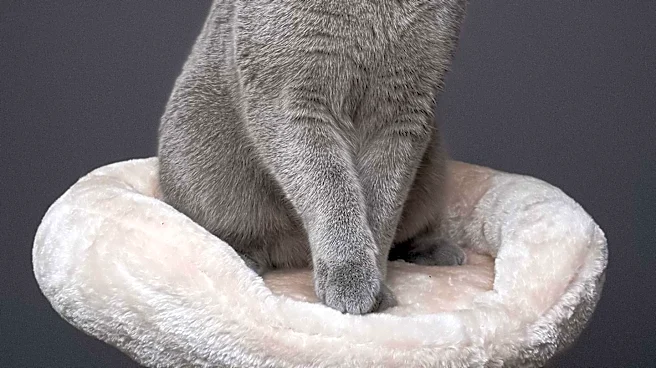
The British Shorthair, a domestic cat breed recognized for its distinctive stocky build, thick coat, and broad face, boasts a rich history that intertwines with the very origins of organized cat fancy. This breed is not merely a modern creation but rather the pedigreed version of a long-standing landrace of British domestic cats. Its journey from ancient origins to becoming the most popular pedigreed cat in its native United Kingdom is a testament
to its enduring appeal and the dedicated efforts of breeders.
Ancient Roots and Roman Influence
The exact timeline of how cats first arrived in the British Isles remains a subject of research, but it appears that housecats were present even before the Roman Empire's expansion into the region. These early felines interbred with the local European wildcat population, leading to the development of a distinct type of cat. Over many centuries, the naturally isolated descendants of these cats evolved into robust, large felines characterized by a short yet very thick coat, a natural adaptation to the conditions of their native islands. Artistic representations from the past suggest that the modern British Shorthair has retained much of this initial physical type, indicating a strong lineage.
The Dawn of Selective Breeding and Cat Shows
The nineteenth century marked a pivotal period for the British Shorthair, as selective breeding efforts began to refine the best examples of this established type. A particular focus was placed on developing the unusual blue-grey variant, which became known as the "British Blue" or "English type." This was done to differentiate it from the more slender "Russian type" of blue cat. While some sources credit UK artist and pioneering cat fancier Harrison Weir with the initial concept of standardizing the breed, others suggest a collaborative effort among a group of breeders. Regardless of the exact origin of the idea, the new British Shorthair made its public debut at the first-ever cat show, organized by Weir at London's Crystal Palace in 1871. This event marked a significant moment for the breed, which enjoyed considerable initial popularity.
Enduring Popularity and Modern Recognition
Following its debut, the British Shorthair quickly rose to prominence, remaining the premiere pedigree at cat shows until 1895. Its calm temperament has also contributed to its frequent appearances in media, famously serving as the inspiration for John Tenniel's iconic illustration of the Cheshire Cat in *Alice in Wonderland*. The Cat Fanciers' Association (CFA) even notes that when the breed exhibits a moment of clumsiness, it quickly recovers with a "Cheshire cat smile." Today, the British Shorthair holds full recognition status in all major cat registries, solidifying its place in the world of pedigreed cats. It continues to be the most popular pedigreed breed in the UK, with half of all kittens registered with the UK's Governing Council of the Cat Fancy (GCCF) each year belonging to the British Shorthair breed. This sustained popularity underscores its appeal and its deep-rooted connection to British heritage.