


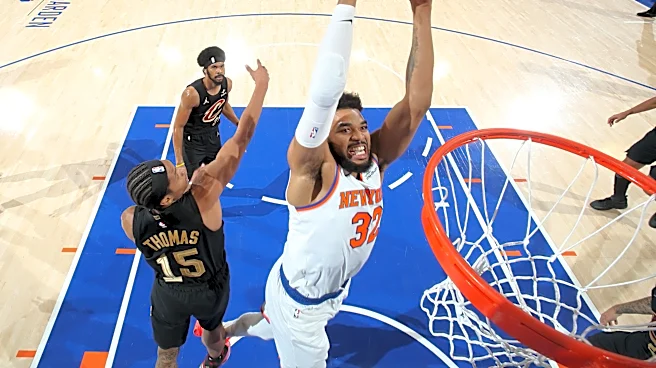
The Cleveland Cavaliers embarked on their journey in the National Basketball Association (NBA) as an expansion team during the 1970–71 season. Their early years were marked by struggles, as they failed to place higher than sixth in the Eastern Conference for their first five seasons. However, the franchise eventually found its footing, achieving its first winning season and playoff appearance in 1976, a significant milestone that saw them advance
to the Eastern Conference Finals. This initial period set the stage for a team that would experience both profound challenges and moments of triumph throughout its history.
Early Struggles and the "Miracle at Richfield"
The Cavaliers' inaugural seasons were difficult, with the team consistently posting losing records. This changed in 1976 when the team, led by players like Austin Carr, Bobby "Bingo" Smith, Jim Chones, Dick Snyder, and Nate Thurmond, under head coach Bill Fitch, secured their first Central Division title. This season is famously remembered for the "Miracle at Richfield," where the Cavaliers defeated the Washington Bullets 4–3 in the Eastern Conference Semifinals. Game 7 was a nail-biter, with Dick Snyder sinking a shot with four seconds left to secure an 87–85 victory. Their run to the Eastern Conference Finals was historic for the franchise, though they ultimately lost to the Boston Celtics 4–2, partly due to Jim Chones breaking his toe before the series began. Following this success, the Cavaliers made playoff appearances in the next two seasons before entering a six-year drought.
The Tumultuous Ted Stepien Era and Rebuilding
The early 1980s were a particularly challenging period for the Cavaliers under the ownership of Ted Stepien, who acquired the franchise in 1980. His tenure was characterized by frequent coaching changes—six in total, including four during the 1981–82 season—and questionable trades and draft decisions. Stepien's strategy often involved trading future draft picks for marginal veteran players, a practice that led the NBA to institute the "Stepien Rule," which prohibits teams from trading first-round draft picks in successive seasons. During his three years as owner, the Cavaliers compiled a dismal 66–180 record, suffered a 24-game losing streak across the 1981–82 and 1982–83 seasons, and lost $15 million. Attendance also plummeted. In 1983, George and Gordon Gund purchased the team from Stepien, bringing an end to this turbulent chapter.
Resurgence in the Late 1980s and 1990s
Under the Gunds' ownership, the Cavaliers began to rebuild and experienced a period of resurgence. Between 1985 and 1998, the team made the playoffs 10 times. The 1988–89 season was particularly strong, with the Cavaliers finishing 57–25, featuring a talented roster including Brad Daugherty, Mark Price, Ron Harper, and Larry Nance, coached by Lenny Wilkens. They achieved another 57-win season in 1991–92 and reached the Eastern Conference Finals that year, though they were unable to advance further. Despite these successes, the Cavaliers faced challenges, including repeated playoff exits, often at the hands of the Chicago Bulls. After 1998, the team entered another dry spell, failing to make a playoff appearance between 1999 and 2005, and finishing the 2002–03 season tied for the worst record in the NBA at 17–65.
The LeBron James Eras and the 2016 Championship
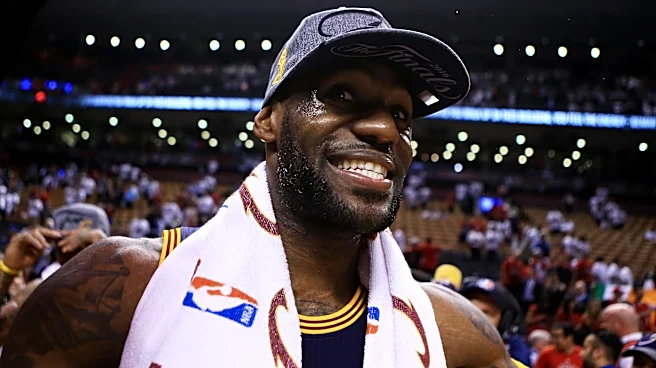
A new era dawned for the Cavaliers with the selection of LeBron James as the No. 1 pick in the 2003 NBA draft. In 2005, Dan Gilbert purchased the team, and under his ownership, with James leading the way, the Cavaliers made five consecutive playoff appearances from 2006 to 2010, reaching their first NBA Finals in 2007, though they were swept by the San Antonio Spurs. After James's departure in 2010, the team struggled, but his return in 2014, alongside Kyrie Irving and Kevin Love, formed a "Big Three" that transformed the franchise. This powerful trio led the Cavaliers to four consecutive Finals appearances from 2015 to 2018, all against the Golden State Warriors. The pinnacle came in 2016 when the Cavaliers won their first NBA championship, becoming the first team to overcome a 3–1 deficit in the Finals. This victory also ended Cleveland's long championship drought in major professional sports, dating back to the 1964 Browns.
Post-Championship and Recent Developments
Following the 2016 championship, the Cavaliers' roster underwent significant changes, including the trade of Kyrie Irving in 2017 and LeBron James's second departure in 2018. The team entered another rebuilding phase, missing the playoffs for several seasons. However, the Cavaliers have shown signs of renewed competitiveness. In the 2021–22 season, they finished 44–38 and qualified for the NBA play-in tournament, marking their first postseason appearance without LeBron James since 1997–98. The acquisition of Donovan Mitchell in September 2022 further bolstered the team, leading to a playoff berth in 2023, again without James, and another in 2024, where they advanced past the first round before losing in the Conference Semifinals. These recent developments indicate a new chapter for the Cavaliers as they continue to build for future success.