

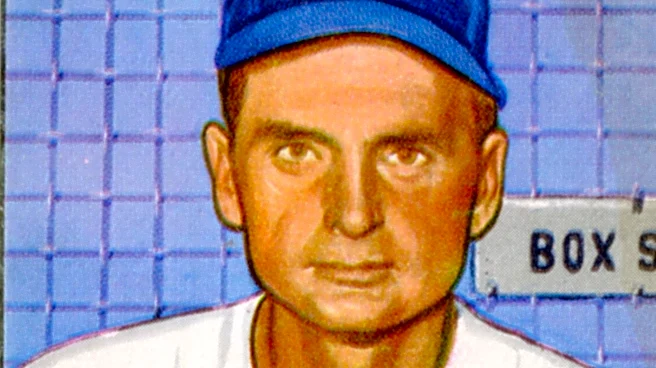
William D. Cox's time as owner of the Philadelphia Phillies was remarkably brief, yet it left a significant mark on the franchise's history, primarily due to the controversy that led to his permanent banishment from professional baseball. In 1943, Cox, a wealthy lumber baron, purchased the struggling team, aiming to revitalize its fortunes. His ownership, though short-lived, saw an immediate, albeit temporary, improvement in the team's performance
and fan engagement. However, his tenure was ultimately overshadowed by a gambling scandal that brought an abrupt end to his involvement in the sport.
Acquisition and Initial Ambitions
William D. Cox acquired the Philadelphia Phillies in 1943, purchasing the team for $190,000 and a $50,000 note on March 15 of that year. At just 33 years old, he became the youngest owner in the National League. The Phillies, at the time, were in a dire state, having finished above .500 only once since 1918 and often struggling financially. The previous owner, Gerald Nugent, had faced significant debt and even needed an advance from the league to attend spring training in 1943. Nugent had initially planned to sell the team to Bill Veeck, who reportedly intended to stock the team with Negro league stars. However, Baseball Commissioner Kenesaw Mountain Landis intervened, pressuring National League president Ford Frick to take over the franchise, which was then sold to Cox a week later.Cox was not afraid to invest in the team, a stark contrast to previous owners who had been unwilling or unable to spend money to build a winning club. He significantly increased the team's payroll and dedicated substantial resources to player development, including the farm system, a first for the franchise. To lead the team, Cox hired Bucky Harris, a manager with a proven track record, having won two pennants and one World Series with the Washington Senators. These initial moves signaled a new era of ambition for the long-suffering Phillies.
Hands-On Ownership and Managerial Conflict
Cox adopted a very hands-on approach to ownership, attempting to manage the Phillies with the same strict discipline he applied to his lumber company. Having played baseball at Yale, he still viewed himself as an athlete. Believing the team needed better conditioning, he hired his high school track coach, Harold Bruce, as the team trainer. Cox even participated in workouts and frequently appeared in the clubhouse before and after games. This level of interference grated on manager Bucky Harris.The conflict between Cox and Harris escalated, leading to a dramatic confrontation. When Harris protested Cox's constant meddling, Cox abruptly fired him on July 27, 1943, announcing the decision at a press conference without informing Harris beforehand. The players, in protest, threatened to go on strike, but Harris urged them to abandon their plans after Cox threatened legal action. Despite the internal turmoil, the Phillies showed signs of improvement under Harris, playing .424 baseball (39–53) by July 27, with just three fewer victories than they had achieved in the entire previous season. The team finished the season 64–90, a 22-game improvement from 1942, and climbed out of the cellar for the first time in five years. This improvement, coupled with Cox's efforts, led to increased fan attendance, more than doubling the 1942 gate and marking their best attendance since 1916.
The Betting Scandal and Banishment
The day after his firing, Bucky Harris dropped a bombshell, revealing that he had evidence of Cox betting on his own team. When Commissioner Landis learned of Harris's accusations, he immediately launched an investigation. Initially, Cox denied any wrongdoing, claiming that only some of his business associates bet on the Phillies. However, as the investigation progressed, Cox changed his story, admitting to making "sentimental" bets on the team. He claimed he was unaware that this was against the rules, a defense that Landis did not accept.On November 23, 1943, Landis suspended Cox indefinitely. Cox immediately resigned as team president but appealed the ruling 11 days later. During the December 4 hearing, Harris testified that he had heard Cox's secretary inquiring about odds for a game between the Phillies and the Brooklyn Dodgers. When Harris questioned if Cox was betting on baseball, the secretary reportedly confirmed it was common knowledge in the Phillies office. Based on this and other evidence, Landis ordered Cox to be banned for life from baseball, making him the first non-player to receive such a ban from Landis and the last owner to be banned for life as of 2025. On the same day Cox was banned, November 23, 1943, the team was sold to Bob Carpenter Sr. and his son for an estimated $400,000. Cox was later reinstated by Commissioner Rob Manfred on May 13, 2025, along with other deceased players on the ineligible list.