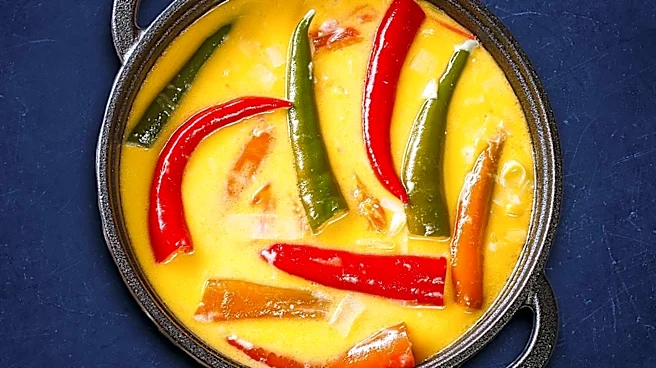









Moqueca, a Brazilian seafood stew, stands as a testament to the country's rich culinary heritage, blending indigenous, African, and Portuguese influences. Typically prepared with shrimp or fish, and a base of tomatoes, onions, garlic, lime, and coriander, this dish has evolved into numerous regional variations. Its significance is such that in 2013, a promotional survey by the Ministry of Tourism identified it as an archetypical recipe essential for
any tourist's experience, even surpassing the well-known feijoada in prominence. The name itself, possibly derived from the word "pokeka" which referred to fish baked in leaves by indigenous peoples, hints at its deep historical roots and continuous transformation across different regions of Brazil.
Origins and Early Transformations
The history of moqueca traces back to indigenous cooking methods. According to Luís da Câmara Cascudo, author of "History of Food in Brazil," the original "pokeka" was fish wrapped in leaves and baked. This simple method gradually transformed as different cultures influenced Brazilian cuisine. The word "moqueca" itself, meaning "to make a wrap," reflects this early preparation style, which adapted over time to incorporate new ingredients and cooking techniques introduced by various populations.
As Brazil developed, so did its culinary landscape. The arrival of African populations, particularly in Bahia, introduced new elements like coconut milk and palm oil, which became integral to the Bahian style of moqueca. Simultaneously, Portuguese influences, especially evident in Espírito Santo, shaped the stew to resemble European stews more closely. This fusion of culinary traditions created the diverse moqueca we know today, with each region adding its unique stamp to the dish.
Regional Distinctions: Bahia vs. Espírito Santo
The most prominent regional variations of moqueca are found in Bahia and Espírito Santo, each boasting a distinct character. In Bahia, the African influence is undeniable, making coconut milk and palm oil (dendê oil) mandatory ingredients. Common fish used in Bahian moqueca include dorado, shark, whiting, and sea bass. This version is often described as richer and more intensely flavored due to the specific oils and spices used.
In contrast, the moqueca from Espírito Santo, known as Moqueca Capixaba, is seen by some, like Caloca Fernandes, author of "Gastronomic Journey Through Brazil," as having a purer aspect of Portuguese stews. This version typically omits palm oil and coconut milk, instead relying on olive oil or soybean oil, and often uses annatto for color. The emphasis in Capixaba moqueca is on the fresh flavors of the seafood and vegetables, resulting in a lighter, yet equally flavorful, stew. The preparation of pirão, a side dish often served with moqueca, also differs between the two regions, with the Bahian version being heavier due to raw flour, while the Capixaba method hydrates the flour in cold water first, making it lighter.
The Essential Role of the Ceramic Pan
Regardless of the regional variation, cooking moqueca in a ceramic pan is often considered an essential part of the dish. This tradition is not merely aesthetic; ceramic pans are highly valued for their ability to retain heat, keeping the stew steaming hot for longer periods. This characteristic is particularly cherished in Espírito Santo, where the craft of making these pans has achieved cultural heritage status.
The Ofício das Paneleiras de Goiabeiras, a community of potters in Vitória, Espírito Santo, was registered as a cultural asset by the National Historical and Artistic Heritage Institute (Iphan) in 2002. These artisans create ceramic pans using local clay and indigenous techniques. After hand-modeling, the pans are dyed with red mangrove bark and fired in the open air. Beyond heat retention, the specific clay used in these pans is believed to reduce the acidity of tomatoes and peppers, contributing to the mildness of Espírito Santo moqueca and preventing heartburn, as noted by Paulo Cesar Casagrande, owner of the Meaípe restaurant in São Paulo. This highlights how the cooking vessel itself plays a crucial role in the flavor and experience of this iconic Brazilian dish.