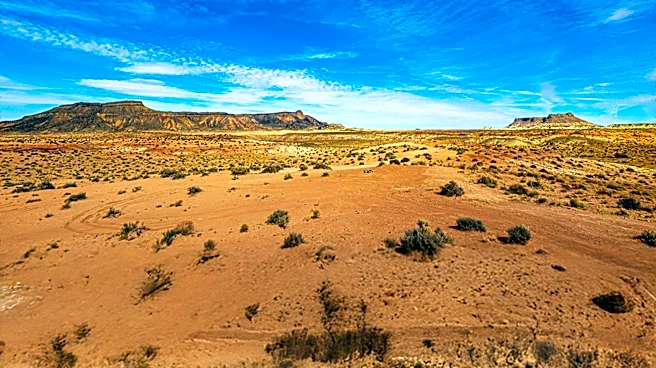





The region now known as New Mexico has a complex history of shifting allegiances and administrative control, transitioning from a part of New Spain and Mexico to a contested territory during the American Civil War. This area, which was part of the Viceroyalty of New Spain from 1535 to 1821 and then Mexico from 1821 to 1847, experienced significant changes following the Mexican-American War. Over half of New Mexico was even claimed by the Republic
of Texas from 1836 to 1841, though this control was never firmly established. The Treaty of Guadalupe Hidalgo, signed on February 2, 1848, officially established full administrative control of New Mexico by the United States, marking a new era for the territory. However, this transition did not bring immediate stability, as the region soon found itself embroiled in the complexities of the American Civil War.
The Aftermath of the Mexican-American War and Early Territorial Challenges
Following the Mexican-American War, New Mexico was organized as a U.S. territory in 1850. For many years, its precise boundaries and internal administration remained undefined, leading to various proposals for its division. In 1853, the territory expanded south of the Gila River with the Gadsden Purchase. Early proposals for a separate Territory of Arizona emerged as early as 1856, driven by concerns about the effectiveness of the territorial government in Santa Fe to administer the newly acquired southern portions. These initial proposals for Arizona envisioned a north-south division, rather than the modern east-west split.
In February 1858, the New Mexico territorial legislature adopted a resolution supporting the creation of an Arizona Territory with a north-south border along the 109th meridian, with the additional stipulation that all New Mexico Indians would be removed to northern Arizona. Impatient with Congress's inaction, a convention of thirty-one delegates met in Tucson in April 1860 and adopted a constitution for a provisional territorial government for the area south of 34 degrees north, electing Dr. Lewis S. Owings as provisional governor. However, the U.S. Congress repeatedly refused to recognize these proceedings, citing the small population of the proposed territory. Further complicating matters, in March 1861, the U.S. government revoked a contract with the Butterfield Overland Stagecoach Company, which supported mail delivery from San Antonio through El Paso, Mesilla, Tucson, and on to California. The loss of this vital communication link angered settlers in the Arizona region, coinciding with the secession of many Deep South states from the Union.
Divided Loyalties and the Confederate Claim to Arizona
At the start of the Civil War, many New Mexicans, having only recently been annexed from Mexico, were apathetic to the ongoing secession crisis. Their distinct Hispanic ethnicity and cultural identity, coupled with prior experiences that generated alienation and animosity toward Texans, influenced their allegiances. When a side had to be chosen, much of the New Mexico Territory's population sided with the Union. However, many settlers in the region carved out by the Gadsden Purchase willingly joined the Confederate States of America, while the more populous northern section maintained strong ties to Northern trade via the Santa Fe Trail.
Reflecting Southern sentiment in the territory's southern portion, a convention in Mesilla on March 16, 1861, adopted an ordinance of secession and called on citizens of the western portion (southern Arizona) to join the movement. A second convention in Tucson on March 28, chaired by Mark Aldrich, Tucson's first mayor, ratified the Mesilla convention. Provisional officers were elected for the newly established Arizona Territory, with Dr. Lewis S. Owings as governor and Granville Henderson Oury as its first delegate to the Confederate States Congress. In July 1861, a small Confederate force of Texans under Lieutenant Colonel John R. Baylor captured Mesilla. Baylor issued a proclamation declaring possession of the territory for the Confederacy, with Mesilla as the capital and himself as governor. He stated that the territory would comprise all of New Mexico south of the thirty-fourth parallel of north latitude, temporarily organized as a military government. The people of Arizona reaffirmed their support for Baylor in another convention on August 28, 1861, in Tucson, re-electing G.H. Oury as congressman to the Confederate States Congress. Delegate Oury met with Confederate leaders and President Jefferson Davis, leading to the formal creation of the Confederate Territory of Arizona by presidential proclamation on February 14, 1862. This Confederate claim, however, was effectively broken by the Union victory at the Battle of Glorieta Pass in March 1862, though the Confederate territorial government continued to operate out of Texas until the end of the war.