



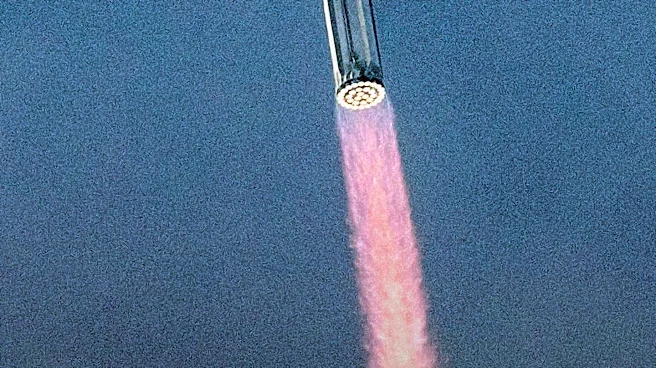

The Ares I-X mission, launched on October 28, 2009, represented a pivotal moment in NASA's Constellation program. As a first-stage prototype and design concept demonstrator for the Ares I launch system, its primary purpose was to gather critical flight data and validate design concepts for future human spaceflight. The mission aimed to test the vehicle's performance through specific flight conditions, assess the behavior of its solid rocket booster,
and evaluate various systems, all while navigating the inherent risks of experimental flight. Despite an unexpected anomaly during descent, the mission ultimately achieved its core objectives.
Defining the Mission's Goals
The overarching goal of the Ares I-X test flight was to verify the performance and dynamics of the Ares I solid rocket booster in a "single stick" configuration. This arrangement differed significantly from the "double-booster" setup used with the Space Shuttle's external tank. The flight profile was carefully designed to closely approximate the conditions the full Ares I would encounter during its initial ascent. This included reaching Mach 4.5, an altitude of approximately 130,000 feet (40,000 m), and experiencing a maximum dynamic pressure (Max Q) of about 800 pounds per square foot (38 kPa). By flying through these specific conditions, NASA sought to collect data that would allow for confident comparison of flight performance with preflight predictions, particularly concerning the Orion crew module and launch abort system (CM/LAS) simulator.
Beyond these primary objectives, the mission also focused on the functionality of various onboard systems. The active roll control system (RoCS) was tasked with rolling the vehicle 90 degrees after liftoff to emulate the Ares I's launch attitude and maintaining a constant roll attitude during ascent until stage separation. The extensive array of sensors, including approximately 150 in the CM/LAS simulator, was designed to record thermal, aerodynamic, acoustic, and vibration data, which was then transmitted to the ground via telemetry or stored in the First Stage Avionics Module (FSAM) for later recovery. This comprehensive data collection was essential for understanding the vehicle's behavior in flight.
Flight Performance and the Parachute Anomaly
The Ares I-X was successfully launched, and its flight profile largely met expectations, accomplishing all primary test objectives. The vehicle's autonomous flight was controlled by the Fault Tolerant Inertial Navigation Unit (FTINU), located within the upper-stage simulator. Data analysis from the flight, including telemetry and stored information, provided valuable insights into the performance of the solid rocket booster and other systems. The mission demonstrated the viability of many design concepts and provided crucial information for the development of the Ares I.
However, the mission was not without its challenges. During the descent phase, an unexpected anomaly occurred with the first stage's recovery parachutes. One of the three main parachutes failed to open completely, and another opened only partially. This malfunction significantly impacted the booster's splashdown, causing it to hit the ocean surface harder than intended and resulting in structural damage. Despite this issue, the recovery of the first stage, including the fifth segment mass simulator, was still possible, allowing for the retrieval of flight data recorders and reusable equipment. The CM/LAS simulator and the upper-stage simulator (USS) were not recovered, as planned, and fell into the Atlantic Ocean. The incident highlighted the importance of test flights in identifying and addressing potential issues before crewed missions, even as the overall mission was deemed a success in meeting its primary data collection goals.