





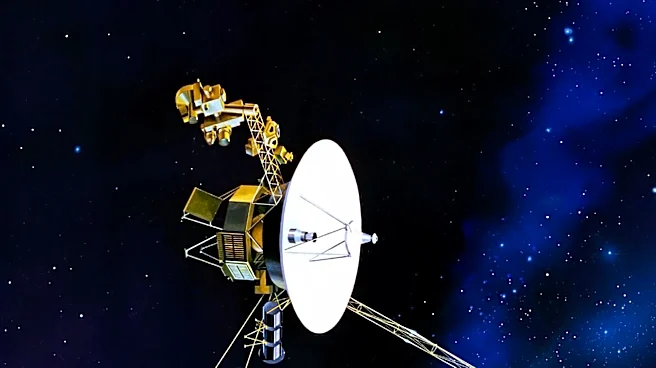


In the vast expanse of our solar system, the discovery of celestial bodies often marks significant milestones in our understanding of the universe. One such discovery is that of Adrastea, a moon of Jupiter, which was first observed in 1979 by the Voyager 2 spacecraft. This event was not only a testament to human ingenuity in space exploration but also a pivotal moment in the study of Jupiter's moons. Adrastea's discovery highlighted the potential
of interplanetary spacecraft in expanding our knowledge of the solar system.
The Voyager 2 Breakthrough
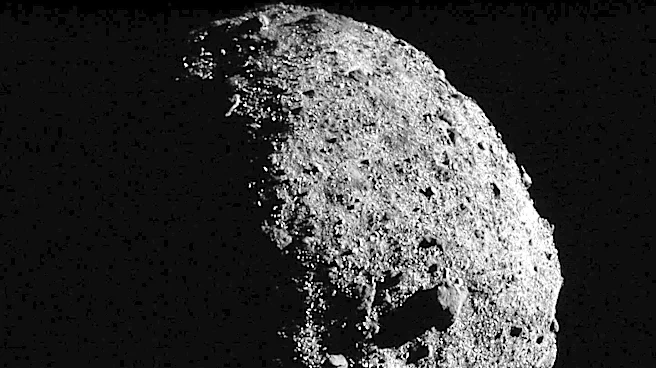
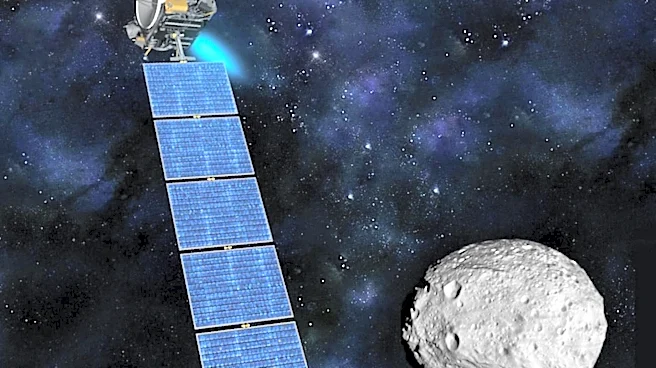
The discovery of Adrastea was made possible by the Voyager 2 spacecraft, which captured images of the moon on July 8, 1979. This marked the first time a natural satellite was discovered through images taken by an interplanetary spacecraft, rather than through traditional telescopic observation. The images revealed Adrastea as a faint dot, straddling the line of Jupiter's rings. This breakthrough demonstrated the capabilities of spacecraft in exploring distant celestial bodies and paved the way for future missions.
The identification of Adrastea was credited to David C. Jewitt and G. Edward Danielson, who analyzed the Voyager 2 photographs. The moon was initially designated as S/1979 J 1, reflecting its status as the first Jovian satellite discovered in 1979. This discovery was part of a broader effort by the Voyager missions to explore the outer planets and their moons, significantly enhancing our understanding of the solar system's dynamics.
Naming and Significance
In 1983, Adrastea was officially named after a Greek nymph, the daughter of Zeus and Ananke. This naming convention followed the tradition of naming Jupiter's moons after figures from Greek mythology, reflecting the planet's association with the Roman god Jupiter, equivalent to the Greek god Zeus. The name Adrastea not only honors mythological heritage but also signifies the moon's role in the Jovian system.
Adrastea's discovery was significant for several reasons. It was the smallest and second closest moon to Jupiter, orbiting within the planet's main ring. This proximity to Jupiter and its rings suggested that Adrastea could be a major contributor of material to the rings, providing insights into the composition and dynamics of Jupiter's ring system. The moon's discovery also underscored the importance of spacecraft in uncovering the mysteries of our solar system.
The Legacy of Adrastea's Discovery
The discovery of Adrastea set a precedent for future space missions, highlighting the potential of spacecraft in exploring and understanding distant celestial bodies. The Voyager missions, including the discovery of Adrastea, demonstrated the effectiveness of using advanced technology to capture images and data from far-off regions of the solar system.
Adrastea's discovery also contributed to the broader understanding of Jupiter's moons and their interactions with the planet's rings. The moon's role in supplying material to Jupiter's rings provided valuable information about the processes governing ring formation and maintenance. This knowledge has been instrumental in shaping subsequent missions to Jupiter and its moons, including the Galileo and Juno missions.
In conclusion, the discovery of Adrastea was a landmark achievement in space exploration, showcasing the power of interplanetary spacecraft in expanding our knowledge of the universe. It highlighted the importance of technological advancements in uncovering the secrets of our solar system and set the stage for future explorations of Jupiter and beyond.