




The Washita River, a significant waterway in the American West, has played a crucial role in the history of the region, serving as a focal point for early exploration, military installations, and tragic conflicts. Its banks have witnessed the movements of various peoples, from French explorers to Native American tribes and U.S. military forces, each leaving their mark on its storied landscape. The river's name itself reflects a journey through different
cultures and languages.
Early Encounters and Naming the River
French explorers were among the first Europeans to encounter the Washita River in the early 18th century. Traveling upstream on the Red River, they initially believed it to be the same stream described by friendly Choctaw tribesmen as the Ouachita River. However, upon closer inspection, they found it appeared significantly different from the descriptions they had received. This led them to name it the Faux Ouachita, meaning "False Ouachita."
Over time, as English-speaking American settlers moved into the region, the name evolved. They referred to it as the False Washita. It wasn't until after the American Civil War that Americans commonly began to refer to the river simply as the Washita. This linguistic evolution reflects the changing demographics and dominant cultures in the area, from French influence to American settlement.
Military Presence and Native American Displacement
In 1842, General and future President Zachary Taylor recognized the strategic importance of the Washita River. He established Fort Washita near the lower end of the river, approximately 19 miles above its confluence with the Red River. The primary purpose of this fort was to protect the resettled citizens of the Choctaw and Chickasaw nations. These tribes had been forcibly removed from the Southeastern United States and relocated to this new territory, and the fort was intended to shield them from the Plains Indians who already inhabited the area.
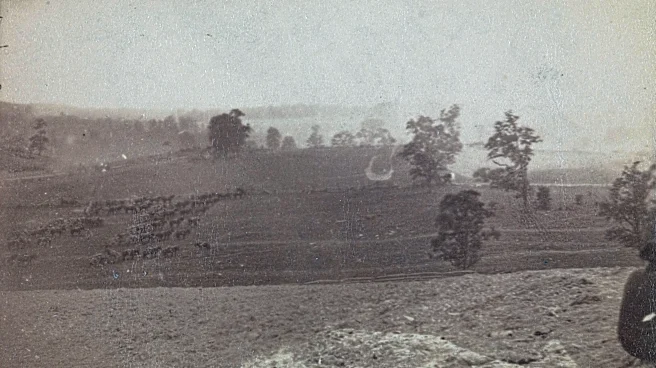
The river continued to be a site of conflict during the later Indian Wars. Most notably, the Battle of the Washita River, also known as the Washita River Massacre, occurred at dawn on November 27, 1868. This event saw Lt. Col. George Armstrong Custer’s 7th U.S. Cavalry attack Black Kettle’s Cheyenne village on the Washita River, near what is now Cheyenne, Oklahoma, resulting in numerous casualties among the Cheyenne inhabitants. The river's proximity to various Native American winter camps made it a critical location for both sustenance and, tragically, military engagements. Another notable event occurred in September 1874, when Captain Wyllys Lyman's wagon train was besieged by Indians near the Washita in Hemphill County, further underscoring the river's role as a contested territory during this tumultuous period.