









Landsat 4 was a groundbreaking satellite in the Landsat program, introducing significant technological advancements that enhanced Earth observation capabilities. Launched in 1982, it was the first satellite in the program to incorporate the Thematic Mapper sensor, which provided higher resolution and more detailed data than its predecessors.
Thematic Mapper Sensor
The introduction of the Thematic Mapper (TM) sensor was a major technological leap for Landsat 4. Unlike the Multispectral
Scanner (MSS) used in earlier satellites, the TM sensor could gather data across seven spectral bands. This increase from four to seven bands allowed for more detailed and comprehensive Earth observation. The TM sensor's bands 1 through 5 and band 7 each had a spatial resolution of 30 meters, significantly improving the resolution compared to the MSS's 57 by 79 meters.
The TM sensor also included a thermal infrared band, band 6, which had a maximum spatial resolution of 120 meters. This capability was particularly useful for monitoring temperature variations on the Earth's surface, providing valuable data for environmental and climate studies. The data rate for TM data was 84.9 Mbit/s, transmitted via an X-band transmitter to modernized ground antennas, ensuring efficient data collection and distribution.
Satellite Design and Communication
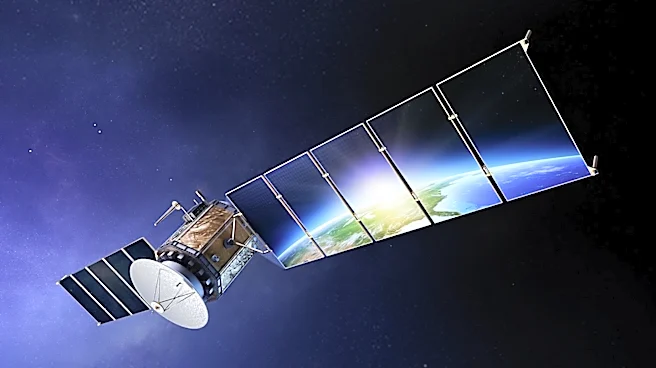
Landsat 4 was designed with a focus on durability and reliability. The satellite was constructed using aluminum panels and graphite struts, and its attitude was controlled with hydrazine thrusters. It was three-axis stabilized with reaction wheels, ensuring precise orientation and stability during its mission.
The satellite's power system included three nickel-cadmium batteries charged by a single solar array with one axis of articulation. This solar array produced 1,430 watts of power, supporting the satellite's operations throughout its extended mission. Communication with the ground was facilitated through a direct downlink with the Tracking and Data Relay Satellite System (TDRSS), using a high gain antenna extended with a retractable boom.
Impact on Earth Observation
The technological innovations introduced by Landsat 4 had a lasting impact on Earth observation. The enhanced resolution and additional spectral bands provided by the Thematic Mapper sensor allowed scientists to conduct more detailed analyses of land use, vegetation, and environmental changes. This data has been instrumental in advancing our understanding of the Earth's surface and has informed various scientific and environmental applications.
Landsat 4's technological advancements set a new standard for satellite imagery and paved the way for future developments in the Landsat program. Its legacy continues to influence current and future Earth observation missions, ensuring that the innovations introduced by Landsat 4 remain a cornerstone of satellite technology.