






Zhang Yimou's 2002 wuxia film, *Hero*, stands out not only for its visual splendor but also for its intricate and multi-layered narrative structure. The film employs multiple, often competing, accounts of the same events, primarily focusing on the planned assassination of Ying Zheng, the future Qin Shihuang, who would become China's first emperor. This approach challenges the audience to discern truth from perception, as the story unfolds through
the eyes of different characters, each with their own motivations and interpretations.
This narrative complexity is likened to *Rashomon*, featuring an unreliable narrator and stories embedded within stories. As the protagonist, Nameless, gets closer to his target, the emperor's portrayal shifts dramatically, evolving from a cruel tyrant to a figure of compassion, strength, and solitude. This transformation is central to the film's thematic depth, inviting viewers to reconsider their initial judgments and understand the broader implications of the characters' actions.
Competing Accounts and Shifting Perspectives
The core of *Hero*'s storytelling lies in its presentation of various versions of the events leading up to the assassination attempt. Nameless, a Qin prefect, arrives at the capital claiming to have defeated three formidable assassins: Long Sky, Flying Snow, and Broken Sword. The king, impressed by this feat, allows Nameless to approach within ten paces to recount his story. Nameless's initial narrative details how he systematically eliminated each assassin, presenting their weapons as proof.
However, the king, a shrewd and perceptive leader, doubts Nameless's account. He suggests that the assassins may have sacrificed themselves to allow Nameless to gain his trust and get close enough for an assassination. This introduces a second, alternative narrative, where the king himself reconstructs the events, proposing a scenario where the assassins willingly participated in a deception to facilitate Nameless's mission. This constant questioning of reality keeps the audience engaged and highlights the subjective nature of truth.
The Role of Color in Narrative Interpretation
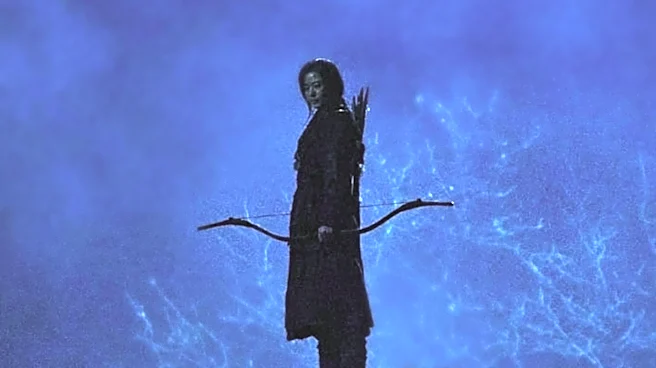
Beyond the verbal accounts, *Hero* utilizes color as a powerful narrative device, visually dividing the film into five distinct sections, each dominated by a particular hue. While the director initially considered using different cinematographers for each section, the collaboration with cinematographer Christopher Doyle resulted in a cohesive yet visually varied approach. The stories are primarily dominated by red, blue, and white, with the overall framing story featuring darker shades of black and flashbacks appearing in vibrant greens.
These colors are not merely aesthetic choices; they subtly influence the audience's interpretation of each narrative. Red is associated with desire, possessiveness, and jealousy, reflecting the intense emotions in certain versions of the story. Blue represents reason and friendship, suggesting a more calculated or harmonious perspective. White, on the other hand, symbolizes the balance of reason and desire, hinting at the ultimate truth or a more enlightened understanding. This visual language adds another layer of complexity, allowing the film to convey emotional and thematic nuances without explicit dialogue.
The Evolution of the Emperor's Character
A crucial aspect of the film's narrative innovation is the evolving portrayal of the King of Qin. In the initial accounts, he is perceived as a target, a ruler whose life is sought by numerous assassins. However, as the narratives progress and the true motivations of the characters are revealed, the king transforms in the eyes of both Nameless and the audience. Broken Sword, one of the assassins, ultimately believes that a unified, peaceful China can only be achieved under the king's leadership, leading him to spare the king during a previous attempt.
This shift in perspective culminates when the king, touched by Broken Sword's wisdom and Nameless's tale, overcomes his fear and grasps the concept that an ideal warrior should lack the desire to kill. This profound understanding leads Nameless to abandon his mission, recognizing the king's vision for a greater good. Even though the king reluctantly orders Nameless's execution to uphold the law and promote national unity, Nameless is honored with a hero's funeral, signifying the complex moral landscape of the film and the nuanced character development achieved through its unique narrative structure.