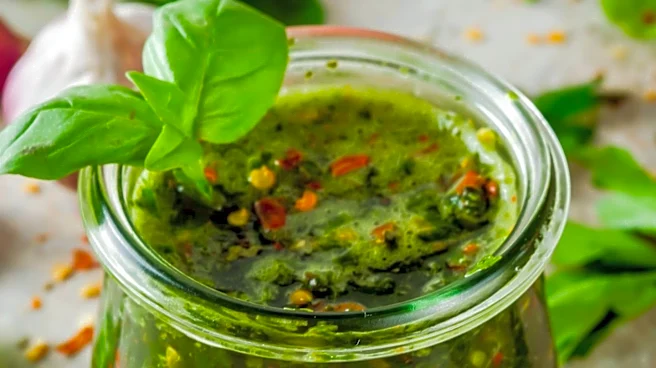









The name "chimichurri" itself is a subject of fascinating linguistic debate, with several theories attempting to explain its origin. While the sauce is widely recognized for its culinary role, particularly in Argentina and across Latin America, the story behind its name is less straightforward. Exploring these etymological possibilities offers a glimpse into the cultural and historical influences that might have shaped this iconic condiment's identity,
moving beyond its simple definition as an uncooked sauce for meat.
Basque Connections: 'Hodgepodge' and 'Hubbub'
One prominent theory suggests that the name "chimichurri" may be derived from the Basque word "tximitxurri." This Basque term translates to "hodgepodge" or "mixture of several things in no particular order." This etymology aligns well with the nature of chimichurri as a blend of various finely chopped ingredients, creating a complex and harmonious flavor profile. The historical context supports this theory, as many Basques settled in Argentina and Uruguay during the 19th century, potentially bringing their language and culinary influences with them.
Another related theory proposes that the name could be a variant of the Spanish word "chirriburri," which means "hubbub." This Spanish term, in turn, might ultimately stem from the Basque word "zurrumurru," meaning "noise" or "rumor." Both "tximitxurri" and "chirriburri" suggest a sense of mixture or perhaps even a lively, somewhat chaotic combination, which could metaphorically describe the vibrant blend of flavors in the sauce. The presence of a significant Basque population in the region during the 19th century provides a plausible pathway for such linguistic transfers into the local lexicon.
Dispelling the English Myths: 'Jimmy's Curry' and 'Gimme Curry'
Despite the compelling Basque theories, numerous false etymologies have circulated, attempting to link the name "chimichurri" to English words. These popular but unsubstantiated stories often suggest that the name is a corruption of phrases like "Jimmy's curry," "Jimmy McCurry," or "gimme curry." These narratives typically involve an English speaker, perhaps a soldier or an immigrant, requesting a sauce or a specific ingredient, leading to a phonetic adaptation that became "chimichurri."
However, historical and linguistic research has found no contemporary documentation to support any of these English-derived stories. While they make for interesting anecdotes, they lack factual basis and are generally considered folk etymologies. The absence of any verifiable records or historical accounts linking the sauce's name to these English phrases strongly suggests that they are later inventions rather than accurate reflections of its origin. The persistence of these myths highlights how cultural narratives can sometimes overshadow documented linguistic history, especially when a name sounds phonetically similar to words in another language.
The Enduring Mystery and Cultural Significance
While the Basque origins offer the most linguistically sound explanations, the exact etymology of "chimichurri" remains a topic of discussion. The fact that multiple theories exist, alongside popular but unfounded myths, underscores the sauce's deep cultural integration and the curiosity it inspires. Regardless of its precise linguistic journey, the name "chimichurri" has become synonymous with a distinct culinary experience, particularly in the context of Argentinian grilled meats. Its widespread recognition across Latin America and beyond solidifies its place not just as a sauce, but as a cultural touchstone with a name that carries its own intriguing history.