






Modern physics represents a profound transformation in humanity's understanding of the universe, emerging primarily in the early 20th century. This branch of physics is characterized by groundbreaking discoveries that challenged the long-held tenets of classical physics, leading to entirely new frameworks for describing matter, energy, and their interactions. The advent of quantum mechanics and relativity, in particular, marked a significant paradigm
shift, moving scientific inquiry into realms previously unimaginable.
From Classical Certainty to Modern Complexity
Classical physics, which largely governed scientific thought before 1900, typically concerned itself with everyday conditions. This meant dealing with speeds far below the speed of light, sizes much larger than individual atoms, and relatively small energies. Its principles were effective in describing phenomena observable in the human-scale world, from the motion of planets to the mechanics of simple machines. However, as scientific tools and experimental techniques advanced, physicists began to probe phenomena at extreme conditions, where classical explanations proved insufficient.
The limitations of classical physics became apparent when examining very high velocities, extremely small distances, and exceptionally large energies. These extreme conditions necessitated a new approach, giving rise to modern physics. The transition wasn't merely an incremental improvement but a fundamental re-evaluation of physical laws. The discoveries made around and after 1890 were so revolutionary that they fundamentally altered the scientific understanding of reality, leading to the development of theories that could account for these previously inexplicable observations.
Key Pillars of Modern Physics: Quantum Mechanics and Relativity
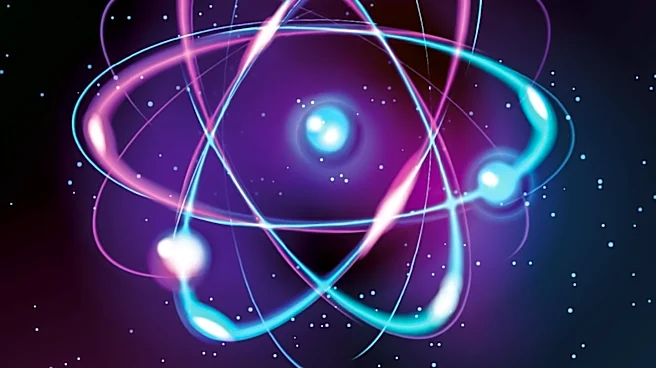
Two monumental theories stand as the cornerstones of modern physics: quantum mechanics and relativity. Quantum mechanics delves into the behavior of matter and energy at the atomic and subatomic levels, where classical concepts of particles and waves break down. It addresses phenomena occurring at