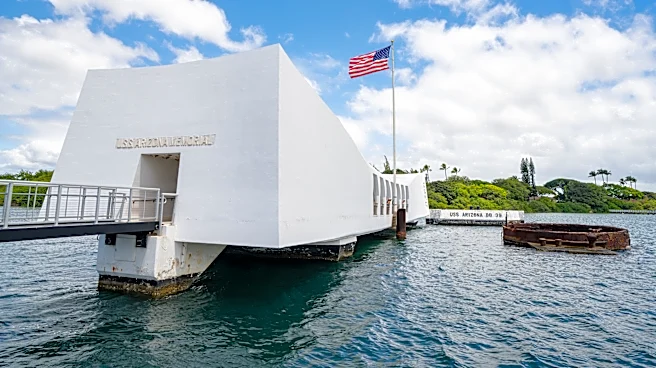
During World War II, Naval Base Hawaii, codenamed *Copper*, encompassed a complex network of naval facilities, with Naval Station Pearl Harbor, codenamed *FRAY*, at its core. This extensive base was not a single entity but a collection of specialized sites, each contributing to the overall war effort. From submarine bases to repair yards and various depots, these facilities were instrumental in supporting the United States' operations in the Pacific
theater, especially after the strategic shift following the loss of bases in the Philippines.
Key Components of Naval Station Pearl Harbor
Naval Station Pearl Harbor itself was a sprawling complex comprising numerous bases, docks, berths, and depots. Among these were the Naval Submarine Base Pearl Harbor, which included berths S-1 to S-21, and the Pearl Harbor PT Boat Base located at berth S-13. The Navy Yard Pearl Harbor was another critical component, featuring berths B-1 to B-26, along with Dry Docks No. 1, 2, and 3, and the floating Dry Dock YFD-2. The 1010 dock, a 1,010-foot wharf, and the Bravo Docks, a 2,900-foot wharf, further expanded the yard's capacity for ship handling and repair.
Specialized Depots and Landing Areas
The base also included several specialized depots and landing areas vital for logistics and operations. Merry Point Landing provided berths M-1 to M-4, while Kuahua Depot offered berths K-1 to K-11. CINCPAC (Commander-in-Chief, Pacific) and CINCPAC Landing had berths H-1 to H-6, alongside a small boat landing. Other facilities included the Richardson Recreation Center and boat landing, a Fire Fighting School and boat landing, and the Aiea Boat Mooring and landing with berths C-3 to C-6 and D-24. These diverse sites ensured that various naval needs, from recreation to emergency services, were met.
Extensive Support Infrastructure
Beyond the main docking and repair facilities, Naval Base Hawaii featured extensive support infrastructure. This included the East Loch and McGrew Point, which housed Naval Base Hospital No. 8 and berths X-6 to X-15. The Pearl City Peninsula East Loch and Middle Loch also provided numerous berths. The Bluff Point and Waipio areas, with berths D-1 to D-13, served as depots. Specialized sites like the Magnetic Proving Ground and a Minesweeper range on the Waipio Peninsula were crucial for testing and training. The West Loch Ammo Depot at Powder Point and the Pearl Harbor Naval Hospital at Hospital Point further underscored the comprehensive nature of the base, providing essential services for personnel and equipment throughout the war.