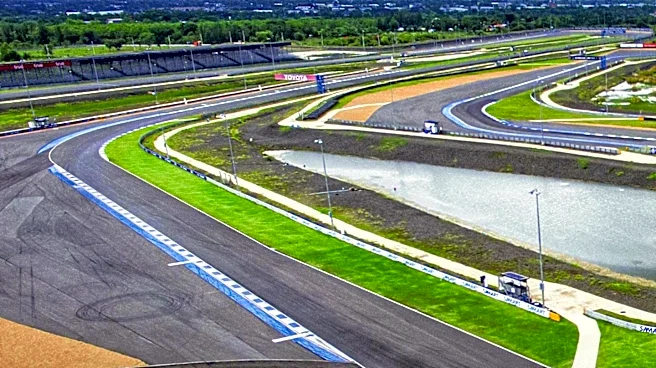




The Charlotte Motor Speedway, a cornerstone of American motorsports, began its journey in 1959 with the vision of Bruton Smith. Located in Concord, North Carolina, just 13 miles (21 km) from Charlotte, the speedway was conceived to be a major hub for racing. Its construction marked a significant moment in the history of NASCAR, as it quickly became regarded as the sport's home track, largely due to the concentration of race teams in the surrounding
Charlotte area. The initial investment for its creation was substantial, costing $1.25 million, and the facility officially opened its gates to the public in 1960.
Founding and Early Years
Bruton Smith, alongside architect Curtis Turner, played a crucial role in the design and construction of the original speedway. Their efforts culminated in the creation of a 1.5-mile (2.4 km) quad oval track, which would become the primary venue for NASCAR events. From its inception, the speedway was designed to host major races, quickly establishing itself on the NASCAR calendar. The early years saw the track build its reputation, laying the groundwork for the iconic events it would host for decades to come. This foundational period was critical in embedding Charlotte Motor Speedway into the fabric of motorsports.
Naming Conventions and Ownership Transitions
Over its history, Charlotte Motor Speedway has experienced changes in its official name. Initially known as Charlotte Motor Speedway from its opening in 1960 until 1998, it then adopted the name Lowe's Motor Speedway, which it held from 1998 to 2009. In 2010, the speedway reverted to its original name, Charlotte Motor Speedway, which it retains to this day. These name changes reflect different eras and sponsorships in the track's operational history. Throughout these transitions, the ownership and operation have remained consistent under Speedway Motorsports Inc. (SMI), with Marcus G. Smith, son of founder Bruton Smith, currently serving as the track president. This continuity in leadership has provided a stable foundation for the speedway's ongoing development.
Expansion into a Multi-Discipline Complex
What began as primarily an oval track for NASCAR has evolved into a sprawling 2,000-acre (810 ha) motorsports complex. This expansion includes the addition of the ZMAX Dragway, a state-of-the-art quarter-mile (0.40 km) drag racing strip. Notably, this drag strip is the only all-concrete, four-lane facility of its kind in the United States, hosting NHRA events. Furthermore, the complex features a modern clay oval track dedicated to dirt racing, including the World of Outlaws finals. This diversification into drag racing and dirt track events demonstrates the speedway's growth beyond its original scope, transforming it into a versatile venue capable of hosting a wide array of motorsports disciplines and appealing to a broader audience of racing fans.