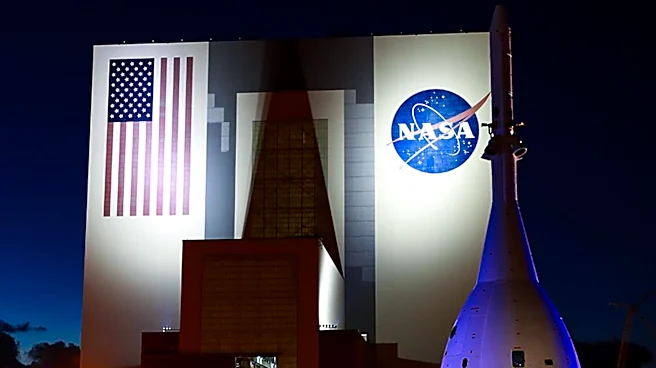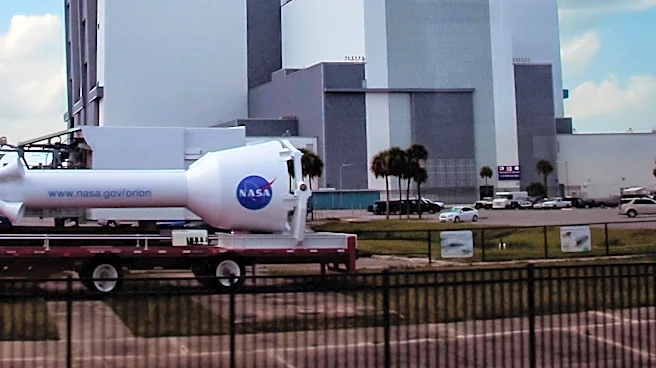





The Vehicle Assembly Building (VAB) at NASA's Kennedy Space Center is not just a functional space for assembling rockets; it is an architectural marvel that stands as a testament to human ingenuity and engineering prowess. Completed in 1966, the VAB was designed to accommodate the assembly of massive space vehicles like the Saturn V and the Space Shuttle. Its sheer size and structural capabilities make it one of the most impressive buildings in the world.
Design and Construction
The design and construction of the VAB were driven by the need to support NASA's ambitious space exploration goals during the Apollo program. In 1963, NASA contracted Urbahn Architects to create a facility capable of assembling the Saturn V rocket, which was essential for sending astronauts to the Moon. The construction began with the driving of steel foundation piles, totaling 4,225, which were driven 164 feet into the bedrock. The foundation itself consisted of 30,000 cubic yards of concrete.
The building required an immense amount of steel—98,590 short tons—to complete its structure. Standing at 526 feet tall, 716 feet long, and 518 feet wide, the VAB covers 8 acres and encloses 129,428,000 cubic feet of space. Its design included provisions for future expansion, although the initial plans for a six-bay structure were scaled back to four bays. Despite its size, the VAB was constructed to withstand hurricanes and tropical storms, a necessity given its location on Florida's Atlantic coast.
Functional Capabilities
The VAB's capabilities are as impressive as its size. It contains four high bays designed for stacking rocket stages vertically, mirroring how they will stand on the launch pad. The building is equipped with five overhead cranes, including two capable of lifting up to 325 tons, and 136 additional lifting devices. These systems allow for precise handling and assembly of heavy components.
Once a launch vehicle is fully assembled and tested, a crawler-transporter lifts the mobile launch platform with the spacecraft and transports it to the launch pad. Each high bay features a massive door—the largest in the world—standing 456 feet tall. The VAB also has an advanced air conditioning system to control moisture, capable of replacing the air inside the building every hour.
Historical Significance
The VAB has played a crucial role in NASA's history, from the Apollo missions to the Space Shuttle program. Originally named the Vertical Assembly Building, it was renamed the Vehicle Assembly Building in anticipation of post-Apollo projects. It was designated as a National Historic Civil Engineering Landmark by the American Society of Civil Engineers in 2020.
Throughout its history, the VAB has been a symbol of American space exploration, witnessing the assembly of iconic spacecraft and serving as a backdrop in several Hollywood movies. Its architectural and engineering achievements continue to inspire awe and admiration, making it a landmark not only in space exploration but also in architectural history.