





On October 23, 1983, Beirut became the scene of a horrific double terrorist attack during the Lebanese Civil War. This coordinated assault involved two suicide truck bombs that struck buildings housing American and French troops, resulting in a devastating loss of life. The bombings marked a grim day for both nations, with the United States Marine Corps experiencing its deadliest single-day death toll since World War II's Battle of Iwo Jima, and France
suffering its worst military loss since the end of the Algerian War. The sheer scale of destruction and the tragic human cost left an indelible mark on the international peacekeeping efforts in Lebanon.
The Attack on the U.S. Marine Barracks
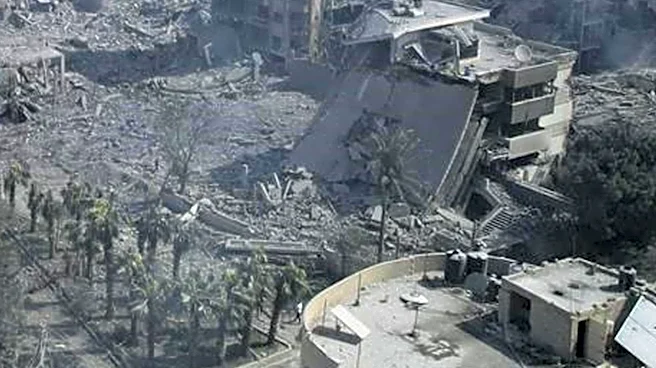
The first and most destructive of the two attacks targeted the building serving as a barracks for the 1st Battalion 8th Marines (Battalion Landing Team – BLT 1/8) of the 2nd Marine Division. A suicide bomber drove a truck laden with explosives directly into the facility. The force of the explosion was immense, later estimated to be equivalent to as much as 12,000 pounds (5,400 kg) of TNT. This massive blast completely destroyed the structure of the building, turning it into rubble.
The human toll at the U.S. Marine barracks was catastrophic. The attack killed 220 Marines, 18 sailors, and three soldiers. This single incident accounted for the vast majority of the total casualties that day and highlighted the extreme vulnerability of the peacekeeping forces to such determined and destructive attacks. The immediate aftermath was a scene of chaos and desperate rescue efforts as personnel searched for survivors amidst the wreckage.
The French Contingent Targeted
Minutes after the attack on the U.S. Marines, a second suicide bomber struck a few kilometers away, targeting the nine-story Drakkar building where the French contingent was stationed. This coordinated timing amplified the shock and impact of the overall assault. The French forces, part of the international peacekeeping mission, faced a similar, brutal fate.
The explosion at the Drakkar building also resulted in significant casualties for the French military. Fifty-five paratroopers from the 1st Parachute Chasseur Regiment and three paratroopers of the 9th Parachute Chasseur Regiment were killed. Additionally, 15 French personnel were injured in the blast. Like its American counterpart, the Drakkar building was completely destroyed, underscoring the power and effectiveness of the suicide truck bomb tactic employed by the attackers.
Aftermath and Responsibility
In total, the double terrorist attack claimed the lives of 307 people, including the two attackers. Beyond the military casualties, six Lebanese civilians also perished in the bombings. A group calling itself the "Islamic Jihad Organization" claimed responsibility for these attacks. However, subsequent investigations and analysis pointed to more specific actors behind the scenes.
Later investigations indicated that Hezbollah was the primary suspect behind the attacks. Furthermore, evidence suggested that the operation was heavily planned and supported by Iran. Some analyses went as far as to describe it as "an Iranian operation from top to bottom." The "Islamic Jihad Organization" was reportedly a front name used by several Lebanese Shia Islamist militant groups with strong ties to Iran's Islamic Revolutionary Guard Corps (IRGC), many of which would later become part of Hezbollah. This connection highlighted the complex geopolitical landscape and the involvement of state and non-state actors in the Lebanese Civil War.