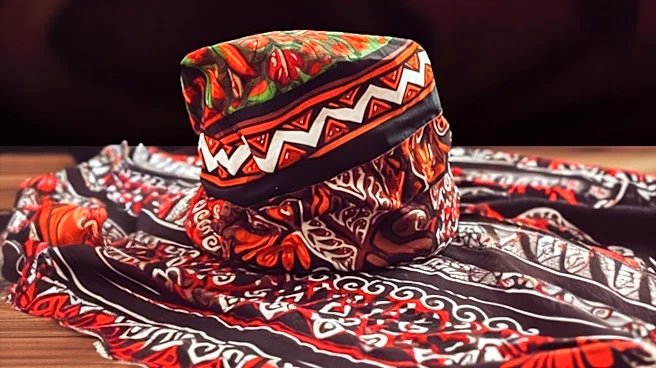

The keffiyeh, a traditional square scarf worn by men in parts of the Middle East and North Africa, has undergone a remarkable transformation. Originally a practical item designed to protect against the harsh
elements of arid regions, it has evolved into a multifaceted symbol, adopted by various subcultures and fashion trends across the globe. Made typically of cotton, this headdress, also known regionally as a hattah, ghutrah, shemagh, or chafiyeh, is often secured with an agal, a head cord, to keep it in place. Its journey from a functional garment to a prominent fashion accessory in the West illustrates a complex interplay of cultural exchange, political symbolism, and commercial appropriation.
Origins and Traditional Utility
The keffiyeh's roots are deeply embedded in the practical needs of those living in desert environments. Headscarves, in general, evolved among Bedouins as a straightforward means of protection from the sun. The keffiyeh, with its square shape and cotton material, served as an effective shield against sunburn, dust, and sand, making it an indispensable part of daily attire in arid regions. This utility underscores its initial purpose, far removed from the symbolic meanings it would later acquire.Beyond its protective qualities, the keffiyeh also became a marker of identity within its traditional context. Early Jewish migrants to Mandatory Palestine, for instance, adopted the keffiyeh because they perceived it as an integral part of the authentic local lifestyle. This adoption highlights how the garment was seen as a natural extension of the regional culture, transcending specific ethnic or religious lines in its early usage. The traditional white keffiyeh, in particular, was worn by Palestinian peasants and Bedouins to shield themselves from the sun during the Ottoman Empire period.
Emergence as a Western Fashion Trend
The keffiyeh's entry into Western fashion circles began in the United Kingdom in the 1970s. Much like other articles of clothing that gained popularity after being worn in wartime, such as T-shirts, fatigues, and khaki pants, the keffiyeh started to be perceived as chic among non-Arabs. This initial wave of popularity saw bohemian girls and punks in the UK wearing keffiyehs as scarves around their necks, signaling a departure from its traditional use and a new interpretation as a style statement.The trend gained further momentum in the United States in the late 1980s, coinciding with the start of the First Intifada. This period marked a significant shift, as the keffiyeh began to carry political connotations alongside its burgeoning fashion appeal. By the early 2000s, its popularity had spread to Tokyo, where youths frequently paired keffiyehs with camouflage clothing, showcasing its versatility and adaptability within diverse fashion landscapes. The mid-2000s witnessed a resurgence of the trend across the United States, Europe, Canada, and Australia, with the keffiyeh becoming a popular fashion accessory, particularly among hipster circles, often worn as a scarf around the neck.