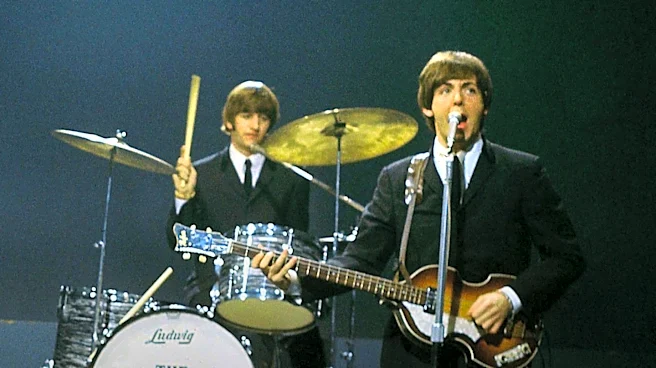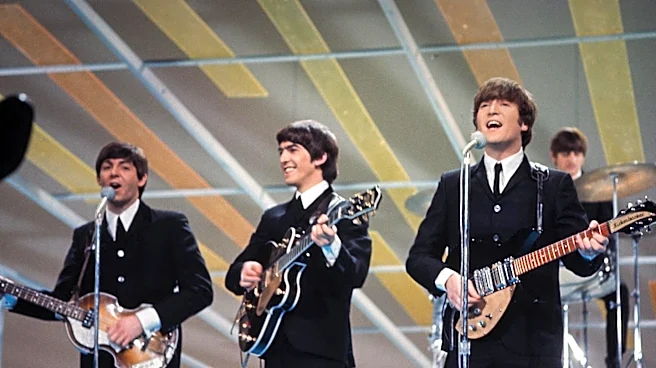

"Yesterday," a song by the English rock band the Beatles, has cemented its place in music history as one of the most celebrated and performed compositions of the 20th century. Written by Paul McCartney
and credited to Lennon–McCartney, its initial release was on the album *Help!* in August 1965. However, in the United States, it was uniquely issued as a single in September of the same year, quickly climbing to the number one spot on the US Billboard Hot 100 chart. This early success was just the beginning of a long and distinguished journey for the song, which would go on to accumulate numerous awards and widespread critical acclaim, solidifying its status as a timeless classic.
Chart Dominance and Early Recognition
Following its initial release, "Yesterday" demonstrated significant chart power, particularly in the American market. It became the fifth of six consecutive number-one Beatles singles on the American charts, a remarkable achievement at the time. This impressive run included other iconic tracks such as "I Feel Fine," "Eight Days a Week," "Ticket to Ride," "Help!," and "We Can Work It Out." The song's popularity was not confined to singles charts; it also appeared on the UK EP *Yesterday* in March 1966, which itself reached number one and held that position for two months. Later that year, it was featured as the title track of the North American album *Yesterday and Today*, further embedding its presence in the music landscape.
The song's immediate impact was also recognized by industry peers. "Yesterday" won the prestigious Ivor Novello Award for "Outstanding Song of 1965." It also secured second place in the "Most Performed Work of the Year" category, only surpassed by another Lennon–McCartney composition, "Michelle." These early accolades underscored the song's quality and its significant cultural footprint right from its inception.
Enduring Critical Acclaim and Public Favor
Decades after its release, "Yesterday" continued to garner significant recognition, proving its lasting appeal. In 2004, *Rolling Stone* magazine ranked "Yesterday" at number 13 on its influential list of "The 500 Greatest Songs of All Time." Six years later, the same publication placed it even higher, at fourth on its list of "The Beatles' 100 Greatest Songs," highlighting its consistent critical appreciation within the band's extensive catalog.
Beyond critical circles, the song's popularity among the public remained immense. In 1999, Broadcast Music Incorporated (BMI) recognized "Yesterday" as the third most performed song of the 20th century on American radio and television, with an estimated seven million performances. It was only outranked by "Never My Love" by the Association and "You've Lost That Lovin' Feelin'" by the Righteous Brothers. Furthermore, in a 1999 BBC Radio 2 poll involving music experts and listeners, "Yesterday" was voted the "Best Song of the 20th Century," a testament to its widespread and enduring appeal across generations. Its induction into the Grammy Hall of Fame in 1997 further solidified its status as a monumental piece of musical heritage.
A Unique Recording and Widespread Influence
"Yesterday" stands out not only for its critical and commercial success but also for its unique recording process. It marked the first official Beatles recording to feature only one band member, Paul McCartney, accompanied by a string quartet. This distinctive arrangement, suggested by producer George Martin, contributed to its melancholic and intimate feel, setting it apart from the band's more typical rock and roll sound. The song's innovative approach and profound emotional resonance have led to it being covered by numerous artists, making it one of the most performed songs in popular music history. Its influence continues to be felt, with its simple yet powerful melody and poignant lyrics resonating with audiences worldwide.