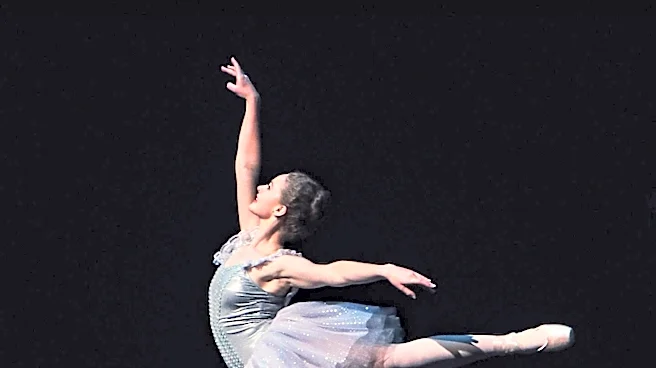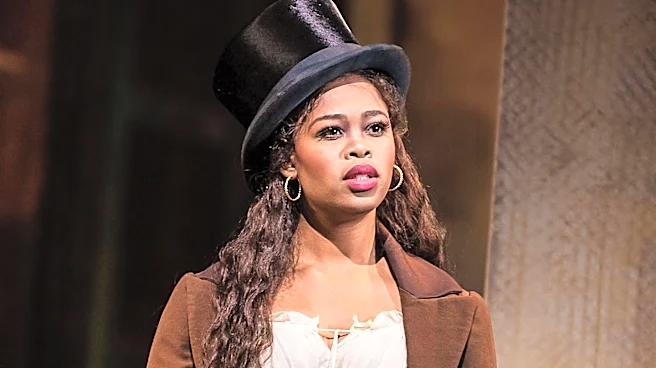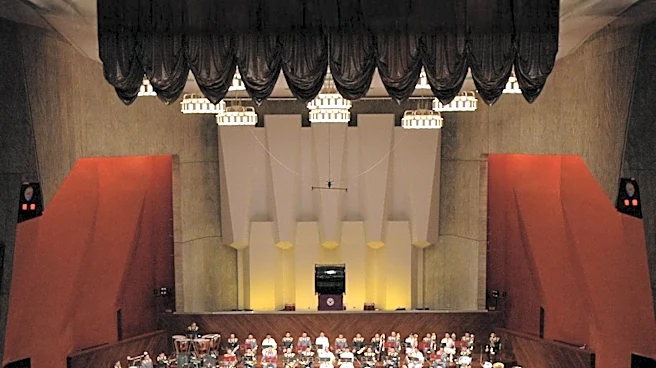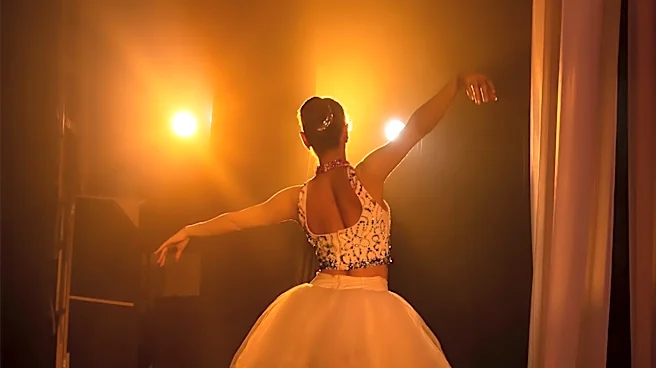









Agnes de Mille's ballet "Rodeo," which premiered in 1942 with music by Aaron Copland, offers a compelling narrative centered on the emotional and social journey of its protagonist, the Cowgirl. Subtitled "The Courting at Burnt Ranch," the ballet unfolds across five distinct sections: "Buckaroo Holiday," "Corral Nocturne," "Ranch House Party," "Saturday Night Waltz," and "Hoe-Down." Each section contributes to the Cowgirl's development, portraying
her struggles with identity, her longing for acceptance, and her eventual triumph in finding love on her own terms. This exploration of a character who defies traditional gender roles was deeply personal for de Mille, reflecting her own experiences of feeling out of place.
"Buckaroo Holiday": Seeking Acceptance in a Man's World
The ballet opens with "Buckaroo Holiday," immediately introducing the Cowgirl's central conflict. She is a lone figure, seeking the affections of the Head Wrangler, who, however, is more captivated by the traditionally feminine Rancher's Daughter. The Cowgirl's attempts to gain the Wrangler's attention involve mimicking the cowboys around her, a behavior reflected in the musical theme "If He'd Be a Buckaroo." This section vividly portrays her awkwardness and her earnest, yet often clumsy, efforts to fit into the masculine world of the ranch. The entrance of the cowboys, envisioned by de Mille as an event "like thunder," with heavy drums and brass, further emphasizes the Cowgirl's position as an outsider trying to integrate.
Musically, the section begins with a grand fanfare, leading to the woodwinds introducing the Cowgirl's quiet theme. This contrasts sharply with the highly rhythmic motif of the main "Rodeo" theme, which evokes the trotting of horses and the energetic world of the cowboys. The repetition of "If He'd Be a Buckaroo" by various solo instruments before its realization in triple canon by the full orchestra underscores the Cowgirl's persistent, though initially unsuccessful, attempts to emulate the cowboys and win their approval.
"Corral Nocturne" and "Ranch House Party": Isolation and Longing
The "Corral Nocturne" delves into the Cowgirl's inner world, portraying her lovesick musings with lyrical intensity through Copland's prominent use of oboe and bassoon. De Mille described this scene with the Cowgirl running "through the empty corrals intoxicated with space, her feet thudding in the stillness," highlighting her profound sense of isolation and yearning. When the Head Wrangler discovers her in the darkness, her inability to approach him in the way the Rancher's Daughter would further emphasizes her confusion and emotional vulnerability. He subsequently leaves with the Rancher's Daughter, leaving the Cowgirl alone.
The subsequent "Ranch House Party" (present only in the full ballet) continues this theme of isolation. De Mille envisioned this section as "Dance music inside. Night music outside." It opens with a honky-tonk theme on piano, accompanied by a more thoughtful clarinet, creating a contrast between the lively party within and the Cowgirl's solitude outside. Here, the Cowgirl finds herself caught between the Champion Roper and the Wrangler, both of whom are attracted to the Rancher's Daughter. The "Corral Nocturne" theme is recalled at the end of this section, reinforcing the Cowgirl's profound loneliness and her continued struggle to find a connection.
"Saturday Night Waltz" and "Hoe-Down": Transformation and Triumph
In the "Saturday Night Waltz," set to de Mille's transcribed version of "I Ride an Old Paint," the cowboys and their girls pair off. The Cowgirl, initially alone and expectant of a partner, is finally approached by the Champion Roper, who has failed to win the affections of the Wrangler. This moment marks a turning point, as the Cowgirl begins to find a connection. Both this section and the "Corral Nocturne" showcase Copland's characteristic economy of sound, using solo instruments over strings to represent the characters, emphasizing their individual emotional states.
The ballet culminates in the "Hoe-Down," which opens with the folk tune "Bonaparte's Retreat." After a reprisal of the "Rodeo" theme, the main theme begins in the strings, with horns providing counterpoint. This section builds not to a traditional climax, but segues into "Miss McLeod's Reel" and briefly introduces the Irish theme "Gilderoy." The Cowgirl's transformation is complete when she finally dons a dress for the dance night, shedding her tomboy persona. The reintroduction of "Bonaparte's Retreat" in canon, followed by the "Rodeo" theme, leads to the climactic kiss between the Cowgirl and the Roper. The full orchestra then triumphantly plays "Bonaparte's Retreat," ending the piece with a grand fanfare, signifying the Cowgirl's ultimate acceptance and happiness. Her journey from awkward outsider to triumphant woman is a testament to de Mille's insightful character development.