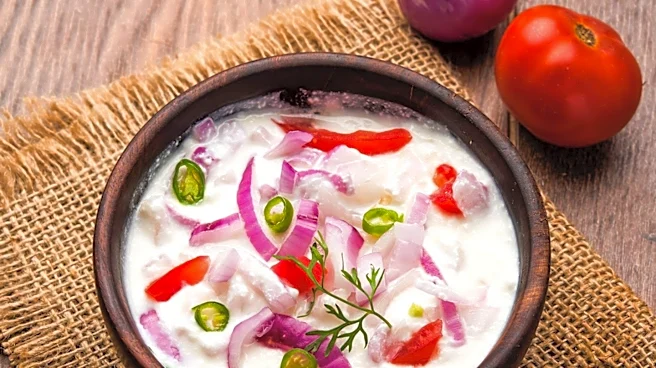







In the vibrant and often fiery world of Indian cuisine, Raita stands out as a crucial element, not just as a side dish, but as a culinary peacemaker. This yogurt-based condiment, typically served chilled, plays a vital role in balancing the intense flavors and heat of many main course dishes. Its refreshing qualities are specifically designed to cool the palate, allowing diners to fully appreciate the complex spices without being overwhelmed. From
rich curries to aromatic pulao rice, Raita provides a soothing counterpoint that enhances the overall dining experience.
A Chilled Respite from Spice
The primary function of Raita is to offer a cool and creamy contrast to the often-spicy nature of Indian meals. The base of dahi, or yogurt, inherently possesses a cooling property, which is further amplified by serving the dish chilled. This temperature difference is key to its effectiveness. When a diner encounters a particularly hot chili or a potent spice blend in a curry, a spoonful of Raita can immediately provide relief, allowing the taste buds to reset and prepare for the next bite. This makes even the most intensely spiced dishes more accessible and enjoyable for a wider range of palates.
Beyond its temperature, the creamy texture of the yogurt also contributes to its cooling effect. It coats the mouth, helping to soothe any burning sensation caused by capsaicin, the compound responsible for the heat in chilies. This physical barrier, combined with the cool temperature, makes Raita an indispensable companion for those who enjoy the depth of Indian spices but prefer to manage their intensity.
Ingredients That Contribute to Cooling
The ingredients commonly found in Raita are often chosen for their refreshing qualities. Cucumber, for instance, is a frequent addition, known for its high water content and crisp, cool texture. Mint, another popular herb in Raita, provides a distinct menthol-like freshness that further enhances the cooling sensation. These fresh, raw vegetables and herbs are not just for flavor; they actively contribute to the dish's ability to refresh and cleanse the palate.
Even the spices used in Raita, such as roasted cumin seeds, while flavorful, are typically used in a way that complements rather than competes with the cooling effect. The tempering process, where spices like cumin and black mustard are fried and then mixed in, adds an aromatic depth without necessarily increasing the heat. This careful selection and preparation of ingredients ensure that Raita consistently fulfills its role as a balancing and cooling condiment, making it an essential part of the Indian culinary tradition.
Enhancing the Dining Experience
Raita's ability to cool the palate does more than just mitigate spice; it enhances the entire dining experience. By providing a refreshing interlude, it allows diners to savor the intricate layers of flavor in the main dishes. Without Raita, the continuous exposure to strong spices might dull the taste buds, making it harder to distinguish the subtle nuances of a complex curry or pulao. With Raita, each bite can be approached with a refreshed palate, leading to a more appreciative and enjoyable meal.
This condiment is served alongside a wide variety of Indian dishes, from simple lentil preparations to elaborate meat and vegetable curries. Its versatility means it can adapt to different flavor profiles, always providing that essential element of balance. The tradition of serving Raita chilled underscores its fundamental purpose: to offer a delightful and necessary contrast that elevates the rich and diverse flavors of Indian cuisine.