




Captain James Cook, a British Royal Navy officer, explorer, and cartographer, left an indelible mark on global exploration through his three voyages to the Pacific and Southern Oceans between 1768 and 1779. Renowned for his exceptional seamanship, courage, and contributions to preventing scurvy, Cook's expeditions vastly expanded European knowledge of the world, mapping coastlines and discovering islands previously unknown to Europeans, including
the Hawaiian archipelago. However, his legacy is not without complexity and debate. His interactions with indigenous peoples, the transmission of infectious diseases, and the claiming of indigenous lands for Britain without consent have led to ongoing discussions about his responsibility and the broader impact of his voyages, particularly during his final, more volatile period.
Early Career and Foundational Skills
Born in 1728, James Cook's journey to becoming a celebrated explorer began far from the Royal Navy. At 16, he was apprenticed as a shopboy, a role he quickly proved unsuited for. He soon moved to Whitby, where he was introduced to John and Henry Walker, prominent local ship owners in the coal trade. Cook began his maritime career as a merchant navy apprentice in the Walkers' fleet, carrying coal along the English coast. This period, spent aboard colliers like the Freelove, was crucial for his development. He dedicated himself to studying algebra, geometry, trigonometry, navigation, and astronomy—all essential skills for commanding a ship.At 26, Cook declined a promotion to captain of a merchant ship and instead joined the Royal Navy in 1755, just as Britain was expanding its naval forces for the Seven Years' War. His early naval service included postings on HMS Eagle and HMS Solebay. During the Seven Years' War, Cook served in North America, notably participating in the capture of the Fortress of Louisbourg in 1758. It was here that he met Samuel Holland, an army officer who taught him surveying methods. Their collaboration on charting the St. Lawrence River entrance, with Cook writing sailing directions, marked a turning point. Cook's first engraved map, of Gaspé Bay, was published in 1759. His integration of land-surveying techniques with hydrographic expertise allowed him to produce nautical charts of coastal regions that significantly surpassed the accuracy of most contemporary charts, a skill that would later be pivotal in his selection for Pacific voyages.
Scientific Contributions and Global Mapping
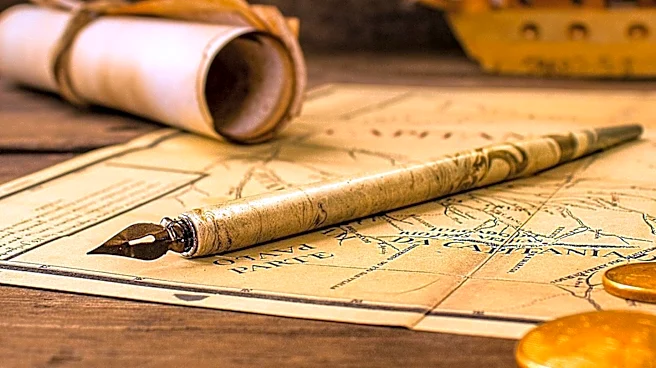
Cook's achievements in North America, particularly his hydrographic and astronomical work, caught the attention of the Admiralty. His first scientific voyage, from 1768 to 1771 aboard HMS Endeavour, was jointly sponsored by the Royal Navy and the Royal Society. While publicly aimed at observing the 1769 transit of Venus from Tahiti, secret orders also directed him to search for the postulated Terra Australis and claim lands for Britain. During this voyage, Cook completed the first recorded circumnavigation of New Zealand's main islands, mapping almost its entire coastline. He also led the first recorded visit by Europeans to the east coast of Australia, claiming it as British territory.His subsequent voyages continued to expand geographical and scientific knowledge. On his second voyage (1772-1775), Cook aimed to determine the existence of Terra Australis, ultimately concluding that no unknown southern continent existed in temperate latitudes. He became the first recorded European to cross the Antarctic Circle. The third expedition (1776-1780) primarily sought a North-West Passage connecting the north Pacific to the Atlantic. Though unsuccessful in finding the passage, Cook charted much of the North American northwest coastline for the first time, determined the extent of Alaska, and closed gaps in earlier explorations of the north Pacific. His voyages left a legacy of scientific and geographical knowledge that influenced successors well into the 20th century.
Controversies and the Decline of His Final Voyage
Despite his immense contributions, Cook's legacy is marked by controversy, particularly concerning his interactions with indigenous peoples. While his instructions from the Admiralty required him to cultivate friendships and treat natives with civility, violent encounters did occur. At least 45 indigenous people were killed by Cook's crew, including two by Cook himself, while 15 crew members, including Cook, were killed by indigenous people. There is ongoing debate about the extent of Cook's responsibility for these conflicts, the transmission of infectious diseases, and the claiming of indigenous lands without consent.During his final voyage, Cook's character underwent a noticeable change. He became increasingly tired, harsh, and volatile. Tensions between Cook and his crew escalated, his reprisals against crew members and indigenous people grew more severe, and some officers began to question his judgment. This shift in leadership style contributed to the deteriorating relations that culminated in his death in Hawaii in 1779. His final moments, during a violent dispute with Native Hawaiians in Kealakekua Bay, stand as a stark reminder of the complex and often tragic consequences of cross-cultural encounters during the age of exploration. Numerous memorials worldwide honor his achievements, yet the debates surrounding his impact continue to shape contemporary understanding of his historical role.