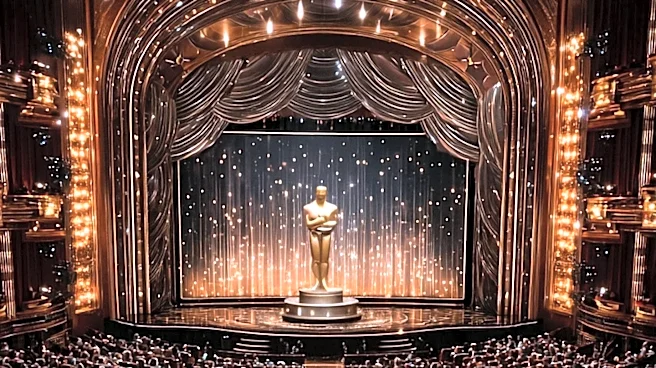







The 14th Academy Awards ceremony, held on February 26, 1942, at the Biltmore Bowl in the Biltmore Hotel in Los Angeles, California, honored film achievements from 1941. This particular ceremony holds a significant place in cinematic history, not only for its winners but also for the unique circumstances surrounding it and some of the notable events that unfolded. Originally, the ceremony faced a brief cancellation due to the attack on Pearl Harbor
on December 7, 1941, a somber event that undoubtedly cast a shadow over the proceedings, even as they eventually went forward.
"How Green Was My Valley" vs. "Citizen Kane"
One of the most enduring narratives from the 14th Academy Awards is the unexpected outcome of the Best Picture category. John Ford's "How Green Was My Valley" took home the top honor, a decision that is now considered notable because it meant "Citizen Kane" failed to win Best Picture. "Citizen Kane," a film later widely regarded as one of the greatest ever made, received nine nominations but ultimately secured only one Oscar, for Best Original Screenplay. This upset has been a point of discussion among film enthusiasts for decades, highlighting a moment when critical consensus diverged sharply from the Academy's choice.
John Ford's win for Best Director for "How Green Was My Valley" marked a significant achievement in his career. It was his third Best Director award, making him the second director to reach this milestone, following Frank Capra. Furthermore, Ford became the first director to win the award in consecutive years, having previously won for "The Grapes of Wrath" in 1940. This back-to-back recognition underscored his prominent status in Hollywood during that era.
Notable Debuts and Sibling Rivalries
The 14th Academy Awards also saw the debut of a new competitive category. This year marked the introduction of the Academy Award for Best Documentary Feature as a Special Award. While it was presented in a special capacity at this ceremony, it would go on to be awarded competitively each year from the next ceremony onward, with the exception of 1946. This addition reflected a growing recognition of the importance and artistry of documentary filmmaking.
Another captivating aspect of the ceremony was the intense public attention focused on the Best Actress race. This category featured a unique sibling rivalry between Joan Fontaine, nominated for Alfred Hitchcock's "Suspicion," and Olivia de Havilland, nominated for "Hold Back the Dawn." Fontaine ultimately emerged victorious, becoming the only acting winner from a film directed by Hitchcock. This personal drama added an extra layer of intrigue to an already high-stakes event.
Records and Broadcasts
The ceremony also set an unfortunate record for one film. "The Little Foxes" received nine nominations but failed to win a single Oscar. This mark was later matched by "Peyton Place" in 1957 and subsequently exceeded by "The Turning Point" and "The Color Purple," both of which received 11 nominations without a win. Such instances highlight the competitive nature of the awards and the sometimes unpredictable outcomes.
Beyond the awards themselves, the 14th Academy Awards had other notable moments. Judy Garland performed "My Country 'Tis of Thee," which was considered the unofficial national anthem of the United States at the time. Additionally, a portion of the ceremony was broadcast by CBS Radio, allowing a wider audience to experience the event. Bette Davis, then President of AMPAS, sought to open the ceremony to the public to benefit the American Red Cross, but her proposal was turned down, leading to her resignation from the post. These details paint a fuller picture of the ceremony's place in both Hollywood and broader American history.