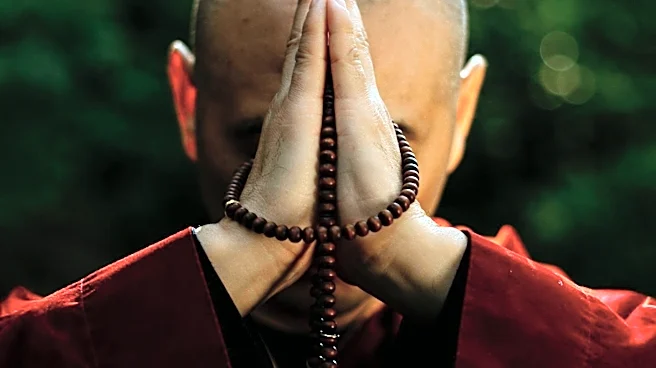



Mudras are symbolic or ritual gestures or poses that hold significant meaning across various Indian religions, including Hinduism, Jainism, and Buddhism. While some mudras involve the entire body, the majority are performed using the hands and fingers. These gestures are not merely decorative; they are considered powerful tools for spiritual practice, communication, and the representation of specific concepts or moments. The term "mudra" itself has
Sanskrit roots, with scholar Sir Monier Monier-Williams defining it as a "seal" or "any other instrument used for sealing," as well as a general noun for specific finger positions practiced in devotion and religious worship, believed to be symbolic.
The Diverse Applications of Mudras
Mudras are deeply integrated into the iconography of Hindu and Buddhist art throughout the Indian subcontinent. They are also extensively described in religious scriptures, such as the *Natyashastra*, which categorizes them into 24 *asamyuta* (one-hand) and 13 *samyuta* (two-hand) mudras. These positions are typically formed by both the hand and the fingers. Beyond static representations in meditation, mudras are also employed dynamically in the *Natya* practice within Hinduism, highlighting their role in both still contemplation and expressive movement.
Their significance extends beyond religious iconography and spiritual practice. Mudras are also integral to many forms of Indian dance and yoga. While there is some overlap, the specific range of mudras used can differ considerably across these fields and religions. Furthermore, many Buddhist mudras have spread beyond South Asia, evolving into distinct local forms in other regions, demonstrating their adaptability and widespread influence.
Key Mudras in Buddhist Iconography
Buddhist iconography frequently features various mudras, often combined with different *asanas* (seated postures), to convey specific meanings. These mudras serve as shorthand depictions of significant moments in the life of the Buddha. For instance, the *Abhaya mudra*, known as the "gesture of fearlessness," symbolizes protection, peace, benevolence, and the dispelling of fear. In Theravada Buddhism, this mudra is typically shown with the right arm bent and raised to shoulder height, palm forward, fingers together and pointing upright, while the left hand rests by the side. In Thailand and Laos, it is associated with the Walking Buddha, sometimes depicted with both hands forming an identical double *Abhaya mudra*.
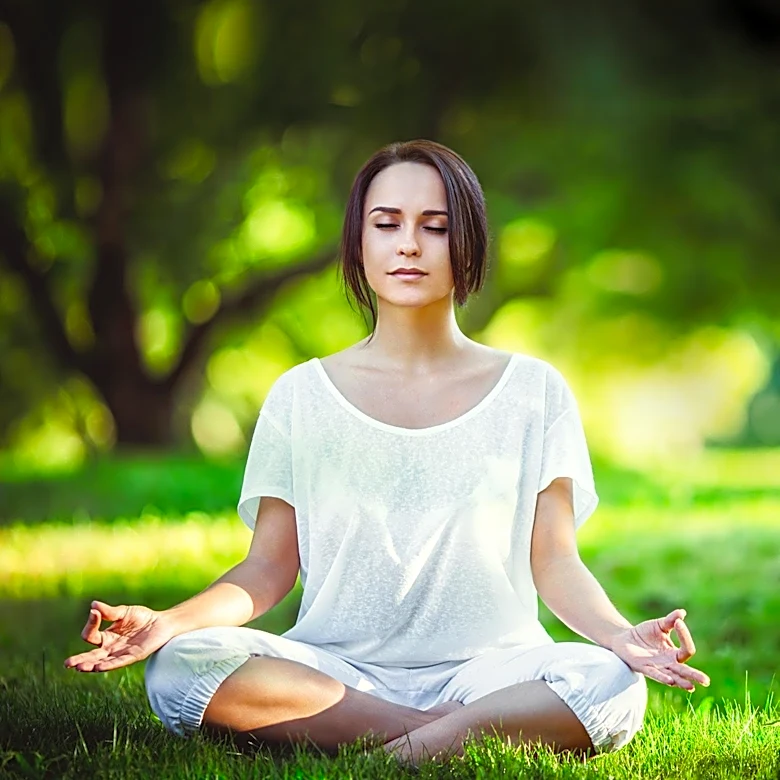
Another prominent mudra is the *Bhumisparsha mudra*, or "earth witness" mudra, which is one of the most common iconic images of Buddhism. It depicts the moment Buddha attained complete enlightenment, with his left hand palm-up in his lap and his right hand touching the earth. This gesture recalls the legend where Buddha called upon the earth goddess, Phra Mae Thorani, to witness his right to enlightenment when challenged by Mara. The *Dhyana mudra*, or "meditation mudra," is the gesture of meditation and concentration. Here, both hands are placed on the lap, with the right hand resting on the left, fingers fully extended, and thumbs facing diagonally upward, forming a triangle that symbolizes spiritual fire or the Three Jewels.
Other Significant Mudras and Their Meanings
The *Dharmachakra Pravartana mudra*, meaning "turning of the wheel," represents the moment Buddha preached his first sermon after enlightenment. This mudra is generally depicted only by Gautama Buddha, or Maitreya as the dispenser of the Law. It involves two hands held close together in front of the chest, with the right palm forward and the left palm upwards, sometimes facing the chest. Variations exist, such as those seen in the Ajanta Caves frescoes where the hands are separated and fingers do not touch.
The *Varada mudra*, or "generosity gesture," signifies offering, welcome, charity, giving, compassion, and sincerity. It is almost always shown with the left hand by revered figures dedicated to human salvation. This mudra can be made with the arm bent and palm turned slightly upward, or with the arm facing downwards, palm presented with fingers upright or slightly bent. It is rarely seen without another mudra in the right hand, typically the *Abhaya mudra*. The *Vitarka mudra*, or "mudra of discussion," is the gesture of discussion and the transmission of Buddhist teaching, formed by joining the tips of the thumb and index finger while keeping the other fingers straight, similar to the *Abhaya* and *Varada* mudras but with the thumb and index finger touching.