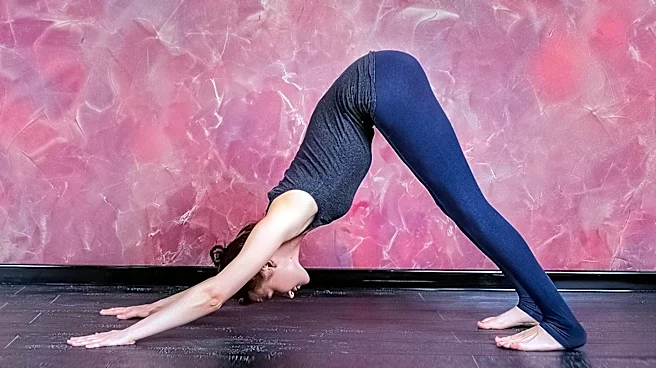





Adho Mukha Svanasana, widely recognized as the Downward-Facing Dog Pose, stands as one of the most iconic and frequently practiced postures in the realm of yoga. Its prominence extends beyond the yoga studio, permeating popular culture and even advertising. This widespread recognition highlights its significance, yet its historical journey and the nuances of its naming reveal a deeper story within the evolution of Hatha Yoga. The pose, characterized
by its inverted 'V' shape, is a cornerstone of many yoga sequences, including the dynamic Sūryanamaskāra, or Sun Salutation.
The Sanskrit name itself is a descriptive compound: "adho" meaning "down," "mukha" meaning "face," "śvāna" meaning "dog," and "āsana" meaning "posture" or "seat." This precise etymology paints a clear picture of the pose's physical form. However, despite its current ubiquity, the specific name "Adho Mukha Svanasana" does not appear in any known medieval or earlier Hatha Yoga sources, suggesting a more recent formalization of the nomenclature.
Historical Context and Naming Conventions
While the name "Adho Mukha Svanasana" may be a more modern development, similar postures have historical precedents. An 18th-century Hatha Yoga manual describes a pose called "Elephant Pose" (Gajāsana), which bears a resemblance to the Downward-Facing Dog. This suggests that the physical form or a precursor to the pose existed long before its current Sanskrit designation became widespread. The evolution of asana names often reflects a process of refinement and standardization within different yoga traditions over time.
Sanskrit, the ancient language of yoga, employs compound names to describe postures. These compounds are formed by combining terms, with the determining word preceding the determined word. For Adho Mukha Svanasana, the analysis reveals a four-term compound. It begins with "śvānāsana" (dog posture), then adds "mukha" (mouth or muzzle) to become "mukhāśvānāsana" (posture of a dog with a muzzle). Finally, the adverb "adhas" (down, downwards, below) is added, becoming "adho" due to phonetic rules, resulting in "adhomukhāśvānāsana" (posture of a dog with its muzzle turned downwards). This linguistic breakdown illustrates the descriptive precision inherent in traditional yoga terminology.
Cultural Impact and Modern Adaptations
Today, Downward-Facing Dog is not just a yoga pose; it's a cultural touchstone. Its visual distinctiveness makes it instantly recognizable, contributing to its frequent appearance in media and advertising. This widespread exposure has cemented its place in the public consciousness as a symbol of yoga itself. Its status as one of the most known and practiced yoga postures underscores its foundational role in contemporary yoga practice.
Beyond its cultural presence, the pose's adaptability has contributed to its enduring popularity. While it can be a challenging inversion for beginners, various modifications allow practitioners of all levels to engage with it. These include bending the knees, using props like rolled-up mats for heel support, or even utilizing chairs to reduce pressure on the shoulders. Such adaptations ensure that the benefits of this classic posture, which include stretching the hamstrings and strengthening the body, remain accessible to a broad audience, further solidifying its cultural footprint.