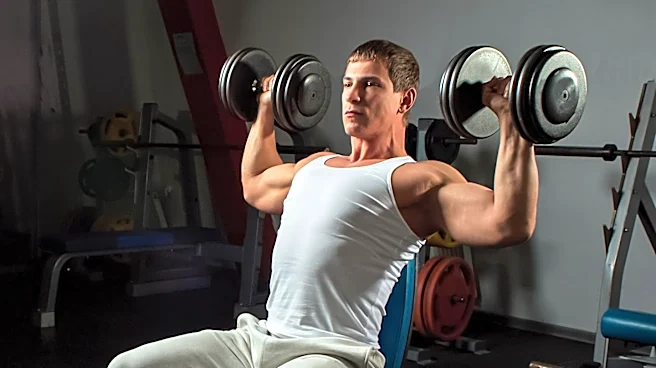







The bench press, also known as the chest press, is a fundamental weight training exercise where an individual presses a weight upward while lying horizontally on a weight training bench. This exercise is a compound movement, meaning it involves multiple joints and muscle groups working in coordination. It is widely utilized in various training disciplines, including general weight training, bodybuilding, and powerlifting, primarily to develop the upper
body muscles, with a significant focus on the pectoralis major.
Core Muscle Groups and Their Roles
The primary muscles engaged during a bench press are the pectoralis major, the anterior deltoids, and the triceps brachii. The pectoralis major, or chest muscle, is crucial for horizontally adducting the shoulder, which is the motion of bringing the arm across the body. Alongside the pectoralis major, the pectoralis minor also becomes activated during the flat bench press. These muscles work together to drive the weight upward from the chest.Beyond the primary movers, other muscles in the back, legs, and core play a vital role in stabilizing the body throughout the movement. This stabilization is essential for maintaining proper form and protecting the shoulder joint. The anterior deltoids, located at the front of the shoulders, assist in the pressing motion, particularly in the initial phase of the lift. With correct form, other parts of the deltoids also contribute to the lift.
The Role of the Triceps and Hand Spacing
The triceps brachii, located on the back of the upper arm, are responsible for extending the elbows. They, along with the anconeus muscle, are particularly critical around the end of the press, helping to complete the movement and lock out the elbows. This final extension is a key component of a successful bench press repetition.The spacing of the hands on the barbell significantly influences which muscle groups are emphasized. A wider hand spacing places a greater emphasis on shoulder flexion, which in turn targets the pectoral muscles more intensely. Conversely, a narrower hand spacing utilizes more elbow extension, thereby shifting a greater focus to training the triceps. Both close and wide hand spacing variations are used, depending on the specific training goals, whether it's to build chest mass or triceps strength.
Movement Pattern and Powerlifting Standards
A conventional bench press begins with the person lying on their back on a flat bench, grasping a barbell directly over their shoulders. Before lowering the bar, the scapulae are depressed and retracted to ensure stability and protect the shoulder joint. The barbell is then lowered to the mid-to-lower sternum until it touches the chest. Following this, the weight is pressed back upward, and the arms are extended until the elbows are locked out, completing one repetition. Throughout the entire movement, the feet must remain flat on the floor.In powerlifting, the bench press adheres to stricter standards. The lifter's head, shoulders, and glutes must maintain contact with the bench throughout the lift, and their feet must stay flat on the floor. The bar is lowered to the chest upon a referee's signal and must remain motionless in contact with the lifter's body until a signal to press is given. The lift is only considered complete once the arms are fully extended and the weight is re-racked. Additionally, for the lift to count, the lifter's elbow joints must be level with or below their shoulder joints at the bottom of the movement, which prevents excessive back arching to shorten the range of motion. These rules can vary slightly across different powerlifting federations.