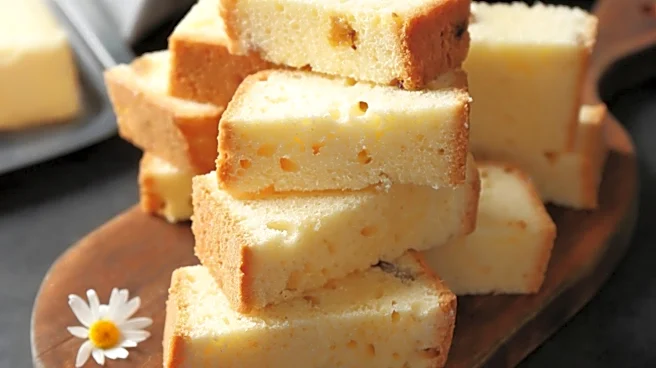








Pound cake, a classic dessert, is fundamentally defined by its core ingredients: flour, butter, eggs, and sugar, traditionally in equal parts. This simple foundation, however, has been a canvas for culinary innovation, leading to a wide array of textures and flavors. The evolution of pound cake recipes showcases how subtle changes in ingredients, from the type of flour to the addition of leavening agents or moistening components, can dramatically
transform the final product, moving beyond its dense, traditional form to encompass lighter, tangier, or more complex variations.
The Foundational Four and Early Adaptations
The original pound cake recipe, first recorded in England in 1747, established the principle of using a pound of each of the four main ingredients. This precise balance was key to its characteristic dense and rich texture. However, even in its early history, adaptations began to emerge. For instance, Eliza Leslie's 1846 recipe for Indian pound cake replaced some of the wheat flour with cornmeal, a practical adjustment made when wheat flour was expensive. This substitution would have introduced a different texture and a subtle corn flavor, demonstrating an early understanding of how ingredient changes could alter the cake's profile.
Further evolution in the 19th century saw more significant departures from the original formula. Eliza Leslie's 1851 edition of *Direction for Cookery* presented a pound cake recipe that called for 10 eggs, beaten as lightly as possible, combined with a pound of flour, and then enriched with wine, brandy, rose water, and the juice of two lemons or three large oranges. These additions were not merely flavorings; the increased number of lightly beaten eggs would have contributed to a lighter texture, while the liquids would have introduced moisture and complex aromatic notes, moving the cake away from its initial simplicity.
Modern Innovations for Texture and Moisture
Contemporary pound cake variations often focus on modifying the cake's density and moisture content. To achieve a less dense cake, bakers may incorporate leavening agents such as baking soda or baking powder. These ingredients react during baking to produce gases, creating a lighter, more open crumb structure compared to the traditional, very dense pound cake. This shift allows for a different eating experience, appealing to those who prefer a less heavy dessert.
Another common modification involves substituting some or all of the butter with cooking oil, typically vegetable oil. The primary intention behind this change is to produce a moister cake. Oils, being liquid at room temperature, can contribute to a softer crumb and a longer-lasting moistness than butter. A popular variation in the United States, sour cream pound cake, exemplifies this focus on moisture and flavor. By substituting sour cream for some of the butter, the cake gains not only additional moisture but also a distinct tangy flavor, adding another layer of complexity to the classic recipe. These variations, while sometimes drastically changing the cake's texture and flavor, still retain the "pound cake" name, a testament to the enduring recognition of its foundational concept.