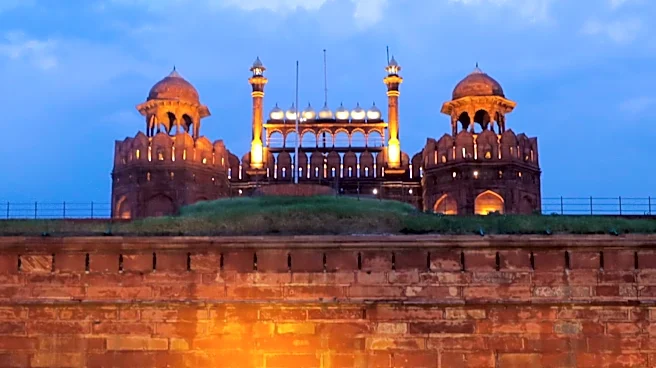







The Red Fort, originally known as the "Blessed Fort" (Qila-i-Mubarak), was commissioned by Emperor Shah Jahan in 1639 as the main residence for Mughal emperors after he decided to move the capital from Agra to Delhi. Its red sandstone walls gave it the name Lal Qila, meaning "Red Fort" in Hindustani. For nearly two centuries, it served as the seat of Mughal power, embodying the zenith of Mughal creativity by synthesizing Islamic palace structures
with local traditions, and inspiring subsequent buildings and gardens across the Indian subcontinent.
Periods of Conflict and Change
Despite its defensive capabilities and status as the seat of Mughal power, the Red Fort was not a site of engagement during the Indian Rebellion of 1857. However, its fate was significantly altered by the rebellion's aftermath. Following the invasion by Nadir Shah of the Afsharid Empire in 1739, the fort was plundered, stripped of its artwork and jewels. In 1764, the Jat ruler Maharaja Jawahar Singh attacked Delhi and captured the Red Fort on February 5, 1765, withdrawing his forces two days later after exacting tribute and seizing the Mughal throne, which now adorns the palace at Deeg.Further turmoil struck in 1788 when Ghulam Kadir, the grandson of Najib ad-Dawlah, looted Delhi, killed female members of the Mughal royal family, and imprisoned Emperor Shah Alam II. Mahadaji Shinde's men freed Shah Alam and pursued Kadir, leading to his apprehension and beheading. As a result, the Maratha flag was permitted to fly from the Red Fort until 1803.
British Occupation and Demolition
After the 1857 rebellion, British authorities ordered the systematic demolition of the Red Fort. An estimated 80% of the fort's structures were destroyed, including the stone screen connecting the pavilions along the river-facing façade. All furniture was removed or destroyed, harem apartments, servants' quarters, and gardens were demolished, and stone barracks were erected in their place. Only the marble buildings on the east side of the imperial enclosure escaped complete destruction, though they were damaged. Over two-thirds of the inner structures were demolished, while the defensive walls and towers remained largely intact. The fort was then repurposed as a military garrison.Restoration and Modern Significance
Lord Curzon, Viceroy of India from 1899 to 1905, initiated significant restoration efforts, including reconstructing walls and reviving gardens with an updated watering system. After Indian independence in 1947, the Red Fort continued as a military cantonment until December 22, 2003, when it was transferred to the Archaeological Survey of India for restoration and conservation. In 2009, a Comprehensive Conservation and Management Plan was announced to revitalize the fort.Today, the Red Fort is a UNESCO World Heritage Site and a monument of national significance. Each year on India's Independence Day, August 15, the Prime Minister hoists the national flag and delivers a speech from its ramparts, a tradition started by Jawaharlal Nehru in 1947. The fort also appears on the back of the ₹500 note of the Mahatma Gandhi New Series of the Indian rupee, underscoring its enduring cultural and historical importance.