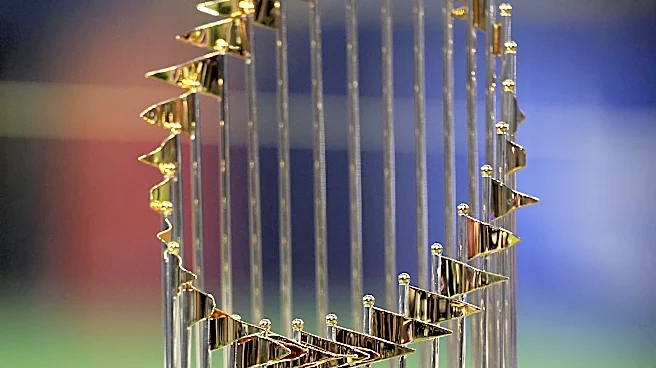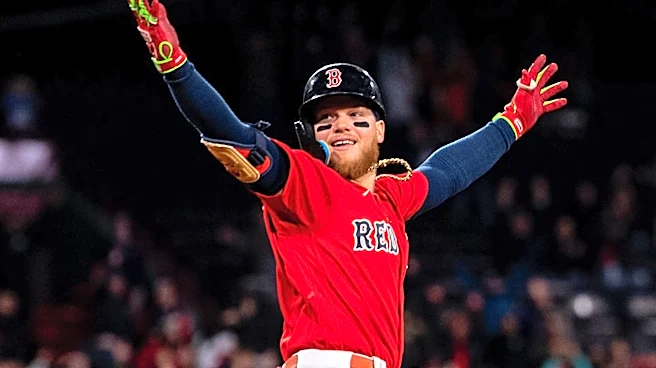

The 2004 World Series marked a monumental occasion in baseball history, as the Boston Red Sox ended an 86-year championship drought by sweeping the St. Louis Cardinals. This victory was not just a win;
it was the culmination of decades of anticipation and a dramatic postseason run that captivated fans across the nation. The Red Sox's performance in the series was dominant, as they never trailed at any point, securing their first title since 1918.
The Road to the World Series: Overcoming Adversity
Before reaching the World Series, the Red Sox had already made history by overcoming a three-games-to-none deficit against their archrivals, the New York Yankees, in the American League Championship Series (ALCS). This unprecedented comeback built significant momentum and confidence within the team, which proved crucial against the Cardinals. The Cardinals, having posted the best record in the major leagues that season, were formidable opponents, and had previously defeated the Red Sox in the 1946 and 1967 World Series, both of which went to seven games. However, the 2004 series would be different, as Boston's newfound resilience overwhelmed St. Louis.
Game 1 and 2: Setting the Tone in Boston
The World Series began at Fenway Park in Boston, with the Red Sox immediately asserting their dominance. Game 1 was an offensive explosion, ending in an 11–9 victory for Boston. This game was notable for Mark Bellhorn's game-winning home run off Pesky's Pole, which he later described as "just doing what he needed to do." It also set a new record for the highest-scoring World Series opening game ever, surpassing the previous record from 1932. Despite making four errors in the game, the Red Sox secured the win. Game 2 saw another sensational performance, this time from Curt Schilling, who pitched with a torn tendon sheath in his right ankle, famously visible through a "bloody sock." The Red Sox won Game 2 by a score of 6–2, taking a commanding 2–0 lead in the series, again despite committing four errors.
Game 3: Pedro Martínez's Dominance in St. Louis
As the series shifted to Busch Stadium (II) in St. Louis, the Red Sox continued their strong play. In Game 3, Pedro Martínez delivered a masterful performance, shutting out the Cardinals for seven innings. The Cardinals' only significant threat came in the third inning when they had runners on second and third with no outs. However, their rally was stifled by a baserunning error from pitcher Jeff Suppan. Suppan inexplicably froze after taking several steps toward home on a ground ball, allowing the Red Sox to turn a double play. This crucial mistake by St. Louis was devastating, and the Red Sox went on to win Game 3 by a score of 4–1, putting them just one win away from the championship.
Game 4: The Sweep and the End of the Curse
Game 4, played on October 27, 2004, at Busch Stadium (II), was the decisive moment. The Red Sox completed their sweep with a 3–0 victory, never allowing the Cardinals to score. The final out came when Édgar Rentería hit the ball back to closer Keith Foulke, who then lobbed it to Doug Mientkiewicz for the final out. This moment sealed Boston's first World Championship in 86 years. The Red Sox's pitching and defense were exceptional in the latter part of the series, holding the Cardinals' offense, which was the best in the National League in 2004, to only three runs in the final three games. Manny Ramírez was named the World Series MVP for his outstanding contributions. The victory was made even more surreal by a total lunar eclipse that colored the moon over Busch Stadium a deep red hue as the Red Sox secured their title, approximately 11 minutes before totality ended. This historic win ended the long-standing "Curse of the Bambino" and brought immense joy to Red Sox fans, many of whom were allowed into Busch Stadium for free to watch the final inning.